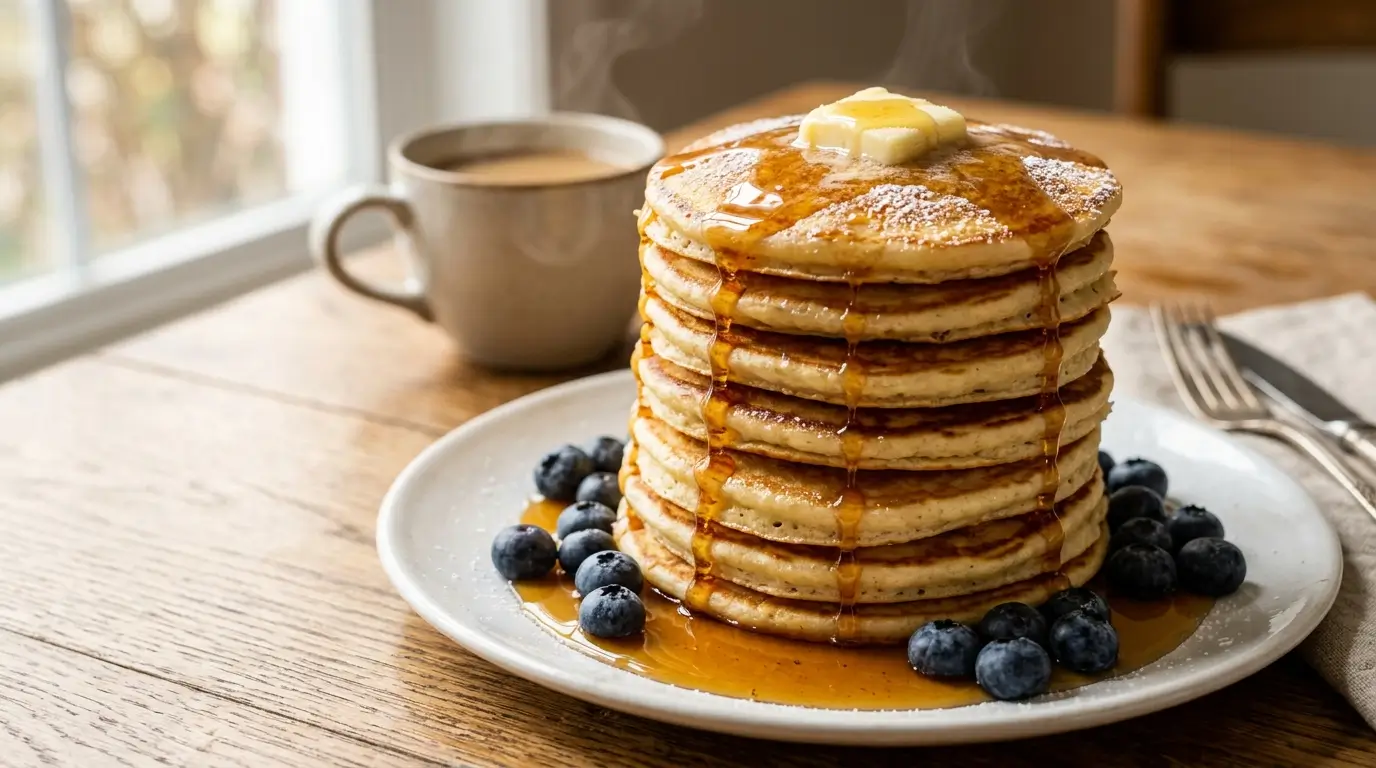
These pancakes turn out light, golden, and full of those classic bubbly air pockets — and the secret isn’t a fancy technique, it’s the leavening. This recipe skips baking powder entirely and relies on baking soda paired with buttermilk: the same acid-base reaction that gives our Classic Irish Soda Bread its rise, scaled down for a stack of fluffy homemade pancakes. The batter comes together in one bowl, needs just a five-minute rest, and turns out tender, golden pancakes every time.
- Prep time: 15 minutes (includes a 5-minute rest)
- Cook time: 20 minutes
- Total time: 35 minutes
- Yield: 4 servings (about 12 pancakes)
- Category: Breakfast
Table content
- 1 Why Baking Soda Makes These Pancakes So Fluffy
- 2 Ingredients for Fluffy Baking Soda Pancakes
- 3 How to Make Fluffy Pancakes With Baking Soda
- 4 Fluffy Pancakes With Baking Soda
- 5 5 Tips for the Fluffiest Pancakes Every Time
- 6 Variations and Add-Ins for Baking Soda Pancakes
- 7 Troubleshooting: Why Aren’t My Pancakes Fluffy?
- 8 More Recipes That Get Their Rise From Baking Soda
Why Baking Soda Makes These Pancakes So Fluffy
Baking soda (sodium bicarbonate) is a base. On its own, sitting in a bowl of flour, it does nothing — it needs an acid to react with. That’s where the buttermilk comes in. The moment buttermilk’s lactic acid meets the baking soda, it triggers a fast reaction that releases carbon dioxide gas. Those CO₂ bubbles get trapped in the batter’s gluten network, and when the batter hits a hot griddle, they expand quickly. That’s the lift that makes these pancakes puff up instead of cooking flat.
There’s a second effect that’s easy to miss: the same reaction makes the batter slightly more alkaline, and alkaline batters brown faster and more deeply — the Maillard reaction, the same browning chemistry behind a seared steak or toasted bread, speeds up as pH rises. It’s part of why baking-soda pancakes often come off the griddle with a deeper golden color and a slightly nutty edge, even at moderate heat.
This is the same chemistry behind our Classic Irish Soda Bread Recipe — baking soda plus an acidic dairy ingredient, reacting to create lift without yeast or a long rise. The main difference is timing: bread batter goes into a hot oven where the reaction continues for an hour, while pancake batter hits a screaming-hot griddle where it happens in minutes.
If you’re wondering exactly how this compares to a baking-powder recipe, our guide to baking powder vs. baking soda breaks down how the two leaveners differ and when each one makes sense.
Ingredients for Fluffy Baking Soda Pancakes
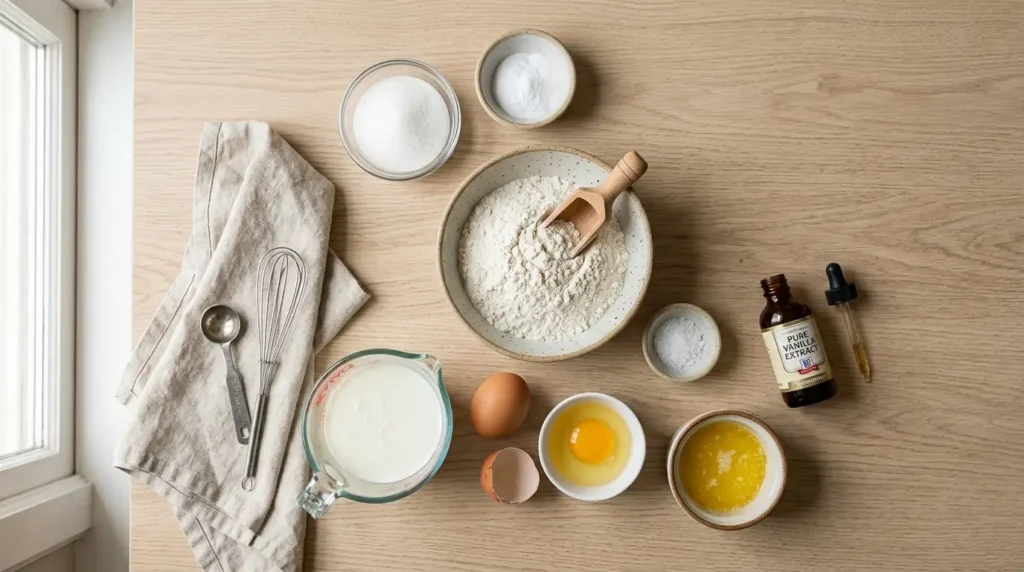
This batter uses pantry staples — nothing you can’t find at a regular grocery store. Each ingredient is doing a specific job, so it’s worth reading the notes below before you swap anything.
- 2 cups (240 g) all-purpose flour
- 2 tablespoons (25 g) granulated sugar
- 1 teaspoon (5 g) baking soda
- 1/2 teaspoon (3 g) salt
- 2 cups (480 ml) buttermilk, well shaken
- 2 large eggs
- 1/4 cup (55 g) unsalted butter, melted and slightly cooled, plus more for the griddle
- 1 teaspoon (5 ml) vanilla extract (optional)
A few notes on the ingredients that matter most:
Baking soda should be fresh — it loses potency over time, especially once a box has been open for a few months. If you’re not sure yours is still active, stir 1/4 teaspoon into a splash of vinegar or lemon juice. A vigorous fizz means it’s still good.
Buttermilk is doing double duty here: it’s the acid that activates the baking soda, and its tang is part of the flavor. Real cultured buttermilk is thicker and more acidic than a quick “soured milk,” which makes a noticeable difference in both rise and taste.
Melted butter (rather than oil) adds flavor and helps the edges crisp slightly, but a neutral oil works as a 1:1 swap if that’s what you have on hand.
No Buttermilk? Make Your Own in 5 Minutes
If you don’t keep buttermilk on hand, you can make a close substitute right in your measuring cup: pour 2 cups of regular milk into a bowl, stir in 2 tablespoons of lemon juice or white vinegar, and let it sit for 5 to 10 minutes. It will thicken slightly and look a little curdled — that’s exactly what you want. The acid does the same job real buttermilk does: it reacts with the baking soda to create lift, and it tenderizes the batter.
This is the same trick we use in our Classic Buttermilk Biscuits — once you’ve got milk and a bottle of vinegar or lemon juice in the fridge, you’re never more than five minutes from a buttermilk-based baking soda recipe.
How to Make Fluffy Pancakes With Baking Soda
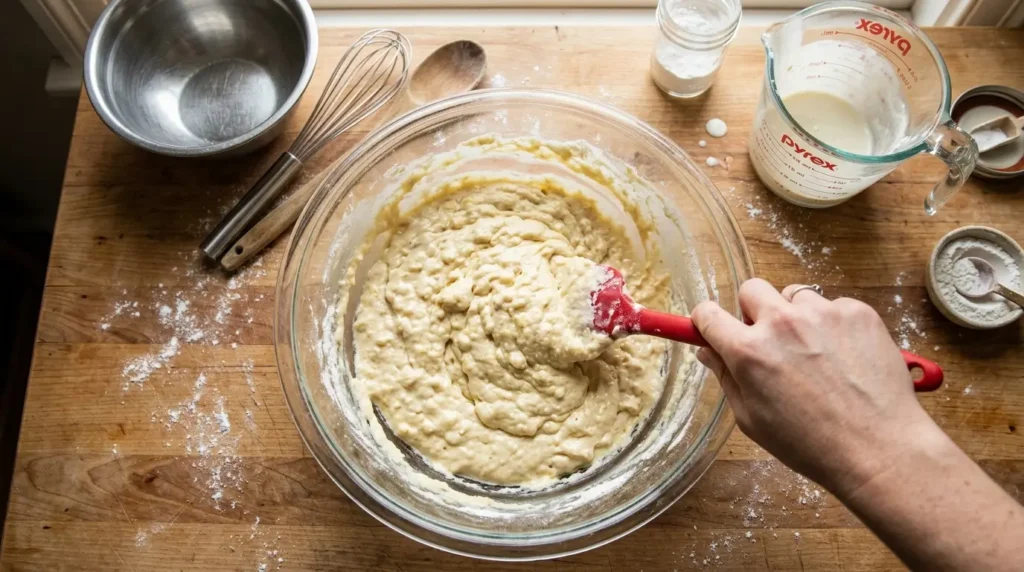
- Whisk the dry ingredients. In a large bowl, whisk together the flour, sugar, baking soda, and salt until evenly combined. Whisking — not just stirring — helps distribute the baking soda so you don’t end up with a bitter pocket in one bite and no lift in another.
- Whisk the wet ingredients. In a separate bowl or a large measuring cup, whisk the buttermilk, eggs, melted butter, and vanilla (if using) until smooth.
- Combine — gently. Pour the wet ingredients into the dry ingredients. Using a spatula or whisk, fold everything together with as few strokes as possible, just until no dry streaks of flour remain. The batter should look a little lumpy. This is the single most important step for fluffy pancakes: every extra stroke develops more gluten, and too much gluten makes pancakes dense and chewy instead of light.
- Let the batter rest for 5 minutes. This short rest gives the baking soda time to start reacting with the buttermilk (you may see small bubbles forming on the surface) and lets the flour finish absorbing the liquid, which smooths out lumps without extra stirring. Don’t let it sit much longer than 10–15 minutes — the leavening power fades as the reaction runs its course.
- Heat the griddle. While the batter rests, heat a griddle or large nonstick skillet over medium heat. Add a small pat of butter or a thin layer of oil and let it heat until a drop of batter sizzles gently on contact.
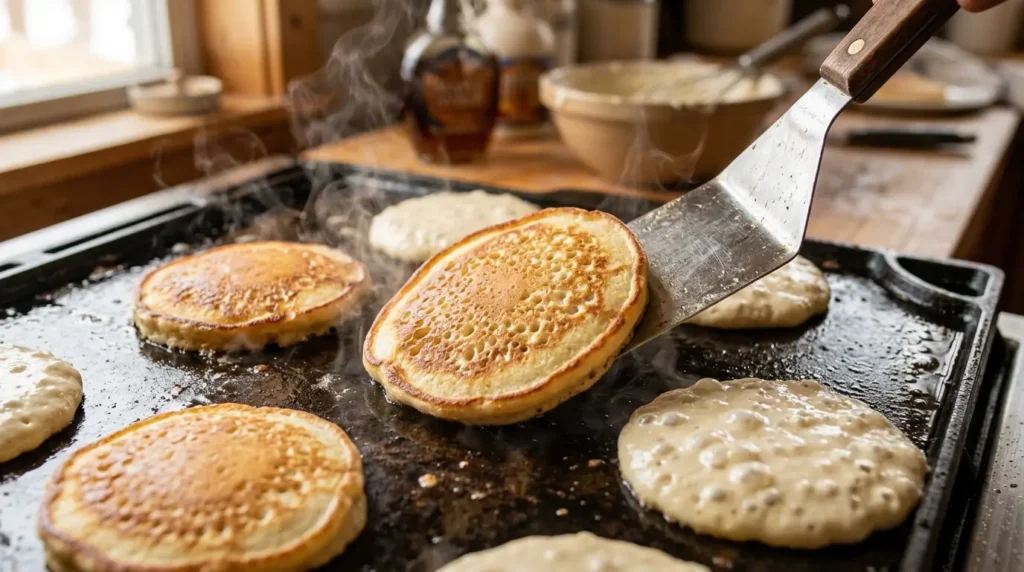
- Pour and cook the first side. Using a 1/4-cup measure, pour the batter onto the griddle, spacing pancakes a couple of inches apart. Cook for 2 to 3 minutes, until bubbles appear across the surface and the edges look matte and set rather than wet and shiny.
- Flip once. Flip each pancake in one confident motion and cook for another 1 to 2 minutes, until the second side is golden brown and the center springs back when lightly pressed.
- Serve right away — or hold them. Pancakes are best eaten hot off the griddle. If you’re cooking for a crowd, see the tip below for keeping a whole batch warm without going soggy.
Fluffy Pancakes With Baking Soda
Fluffy pancakes made with baking soda and buttermilk — no baking powder needed. A one-bowl batter with a quick 5-minute rest gives tender, golden pancakes every time.
- Prep Time: 15
- Cook Time: 20
- Total Time: 35
- Yield: 4 servings (about 12 pancakes) 1x
- Category: Breakfast
- Method: Stovetop
- Cuisine: American
- Diet: Vegetarian
Ingredients
- 2 cups (240 g) all-purpose flour
- 2 tablespoons (25 g) granulated sugar
- 1 teaspoon (5 g) baking soda
- 1/2 teaspoon (3 g) salt
- 2 cups (480 ml) buttermilk, well shaken
- 2 large eggs
- 1/4 cup (55 g) unsalted butter, melted and slightly cooled, plus more for the griddle
- 1 teaspoon (5 ml) vanilla extract (optional)
Instructions
- In a large bowl, whisk together the flour, sugar, baking soda, and salt until evenly combined.
- In a separate bowl, whisk the buttermilk, eggs, melted butter, and vanilla until smooth.
- Pour the wet ingredients into the dry ingredients and fold together gently, just until no dry flour remains. A few small lumps are fine.
- Let the batter rest for 5 minutes.
- Heat a griddle or large nonstick skillet over medium heat and grease lightly with butter or oil.
- Pour about 1/4 cup of batter per pancake. Cook for 2 to 3 minutes, until bubbles form across the surface and the edges look matte and set.
- Flip and cook for 1 to 2 minutes more, until golden brown on the second side and cooked through.
- Serve immediately, or transfer to a wire rack in a 200°F (95°C) oven to keep warm while you finish the batch.
Notes
- No buttermilk? Stir 2 tablespoons lemon juice or white vinegar into 2 cups regular milk and let it sit for 5–10 minutes before using.
- Don’t overmix — a few small lumps in the batter are fine. Overmixing develops gluten and makes the pancakes dense.
- Make sure your baking soda is fresh; stale soda loses lift and can leave a soapy aftertaste if it doesn’t fully react.
- Add-in ideas: blueberries, mini chocolate chips, sliced bananas, or swap half the flour for whole wheat.
- Leftovers freeze well for up to 2 months — reheat in a toaster or a 350°F (175°C) oven for 8 to 10 minutes.
Nutrition
- Serving Size: 3 pancakes (about 1/4 of the recipe)
- Calories: 420
- Sugar: 11
- Sodium: 770
- Fat: 16
- Saturated Fat: 9
- Unsaturated Fat: 7
- Trans Fat: 0
- Carbohydrates: 60
- Fiber: 2
- Protein: 14
- Cholesterol: 130
Keywords: pancakes recipe baking soda, fluffy pancakes, homemade pancakes, baking soda pancakes, easy pancake recipe
5 Tips for the Fluffiest Pancakes Every Time
- Don’t overmix — lumps are good. Stop folding as soon as the flour disappears. A few small lumps will hydrate and vanish during cooking; an overworked batter won’t bounce back.
- Use medium heat, not high. A too-hot griddle browns the outside before the inside cooks through and the bubbles have time to rise, leaving you with pancakes that are dark outside and gummy in the middle.
- Don’t press, and don’t flip early. Pressing with the spatula deflates the air pockets you just created. Flipping before the surface looks matte and bubbly means the structure hasn’t set enough to hold together.
- Treat the first pancake as a test. Griddle temperature almost always needs a small adjustment between the first pancake and the second. Better to “waste” one than the whole batch.
- Bring the buttermilk and eggs toward room temperature first. Cold liquids can cause melted butter to seize into little clumps, which tempts you to overmix while trying to smooth them out. Ten to fifteen minutes on the counter is enough to fix this.
Variations and Add-Ins for Baking Soda Pancakes
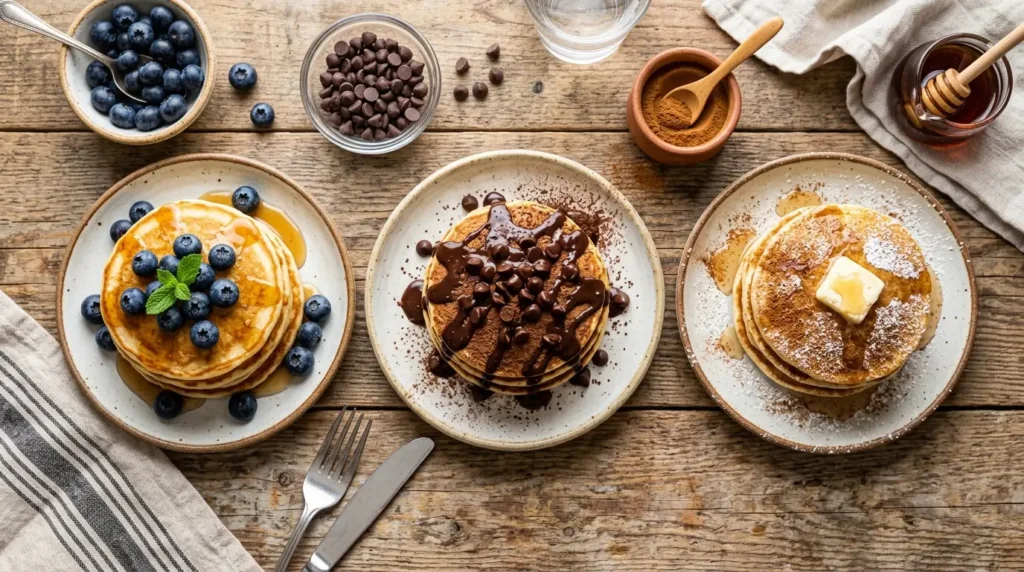
Once the base batter is dialed in, it’s easy to customize:
- Fruit: Fold in 1 cup of fresh or frozen blueberries, or scatter a few banana slices onto each pancake right after pouring the batter. If you love baking with bananas, our Homemade Banana Bread With Baking Soda leans on the same leavening logic in loaf form.
- Chocolate chip: Stir in 1/2 cup of mini chocolate chips for a kid-friendly version.
- Whole wheat: Swap up to half the all-purpose flour (1 cup) for whole wheat flour. Whole wheat absorbs more liquid, so add an extra 2 to 3 tablespoons of buttermilk to keep the batter pourable.
- Spiced: Add 1/2 teaspoon of cinnamon and a pinch of nutmeg to the dry ingredients for a warm, fall-style pancake.
- Dairy-free: Use a plant-based milk (oat or soy work well) and make the same lemon-juice or vinegar substitute described above — the acid still reacts with the baking soda the same way. Swap the butter for a neutral oil or plant-based butter.
Troubleshooting: Why Aren’t My Pancakes Fluffy?
Why are my pancakes flat or dense?
The most common culprits are overmixing (which builds gluten and traps the batter’s structure too tightly to puff), stale baking soda (which has lost its reactive power), or batter that sat too long before hitting the griddle. Try the vinegar test on your baking soda described above, mix only until the flour disappears, and start cooking within about 10–15 minutes of mixing.
Can I use baking powder instead of baking soda?
You can, but the result will be different. Baking powder already contains its own acid, so you’d typically use regular milk instead of buttermilk — and you’d lose the tang and the extra browning that come from the soda-and-buttermilk reaction. As a rough swap, 1 teaspoon of baking soda is roughly equivalent to 3 to 4 teaspoons of baking powder in leavening power. For the full picture of how the two behave differently in batters, see our baking powder vs. baking soda guide.
Why do my pancakes taste soapy, bitter, or metallic?
This is almost always leftover, unreacted baking soda. If there isn’t enough acid to fully neutralize it — for example, using plain milk instead of buttermilk without adding an acid, or measuring the baking soda a bit heavy — the excess leaves an alkaline, soapy taste. Double-check that your teaspoon of baking soda is level, not heaping, and confirm you’re using real buttermilk or the milk-plus-acid substitute above.
Can I make the batter ahead of time?
Mix the dry ingredients the night before and store them covered at room temperature — they’ll keep indefinitely. You can also whisk the eggs, butter, and vanilla together ahead and refrigerate. But add the buttermilk and combine everything just before cooking: because baking soda starts reacting on contact with the buttermilk, batter mixed hours in advance will still taste fine but won’t rise as much.
What’s the best way to keep a batch warm for serving?
Set the oven to 200°F (95°C) and place a wire cooling rack on a baking sheet. As pancakes come off the griddle, transfer them to the rack — not stacked on a plate — and slide the sheet into the oven. The rack lets air circulate underneath, so the bottoms stay set instead of going soggy from trapped steam.
Can I freeze leftover pancakes?
Yes. Let them cool completely, then layer them between sheets of parchment or wax paper in a freezer bag or airtight container; they’ll keep for up to 2 months. Reheat straight from frozen in a toaster, toaster oven, or a 350°F (175°C) oven for 8 to 10 minutes, until warmed through and the edges re-crisp slightly.
More Recipes That Get Their Rise From Baking Soda
Baking soda’s acid-base reaction is the workhorse behind a lot more than pancakes. If this recipe worked for you, browse our full collection of baking soda recipes for more ideas — including the Classic Chocolate Chip Cookies, where the same chemistry, paired with brown sugar’s acidity, controls how much the cookies spread and how chewy they turn out. Once you start noticing where baking soda is doing the work, it’s hard to stop.