For an occasional bout of heartburn, yes — a half-teaspoon of baking soda dissolved in water acts as a fast, FDA-recognized antacid that neutralizes stomach acid within minutes. That part isn’t a wellness claim; it’s basic, well-documented chemistry. What the research doesn’t support is using it as a daily fix, a treatment for the condition causing your reflux, or a safe option for everyone. Below: how the reaction actually works, what the evidence says about effectiveness and “acid rebound,” the dosing limits printed on the box, who should steer clear entirely, and the point at which heartburn stops being a kitchen-cabinet problem.
This article is for general informational purposes and is not medical advice. If reflux is frequent, severe, or new for you, talk to a doctor, gastroenterologist, or pharmacist before using baking soda or any other antacid — especially if you’re pregnant, have high blood pressure, heart or kidney disease, or take regular medication. See our medical disclaimer for more.
This is one of several health questions about baking soda we’ve dug into with the same sourced approach — see our overview of baking soda for health and beauty for the rest.
Table content
- 1 Acid Reflux vs. GERD: What’s Actually Happening
- 2 The Chemistry: How Baking Soda Calms a Burning Stomach
- 3 What the Research Actually Says About Baking Soda for Heartburn
- 4 How Baking Soda Is Typically Used for Heartburn
- 5 Who Should Avoid Baking Soda for Acid Reflux (FDA Warnings)
- 6 Baking Soda vs. Other Heartburn Remedies
- 7 What About Baking Soda and Lemon Water?
- 8 When Acid Reflux Needs More Than Baking Soda
- 9 Frequently Asked Questions
- 10 The Bottom Line
Acid Reflux vs. GERD: What’s Actually Happening

Acid reflux happens when stomach acid flows backward past the lower esophageal sphincter — the valve between your stomach and esophagus — and irritates the lining of the esophagus. The burning sensation behind your breastbone is heartburn; some people also notice a sour or bitter taste at the back of the throat.
Almost everyone experiences this occasionally. A big meal, lying down too soon after eating, coffee, alcohol, or something spicy or fatty can all trigger it. Having reflux once in a while doesn’t mean you have a medical condition.
The distinction that matters here is frequency and damage. According to Mayo Clinic, when acid reflux happens two or more times a week, or when it’s already causing damage to the esophagus, it’s classified as gastroesophageal reflux disease (GERD) — a chronic condition that, on its own, usually needs ongoing management. Mayo Clinic Press notes that roughly one in five U.S. adults has reflux symptoms at least three times a week.
Baking soda’s role fits neatly into the first category — the occasional, once-in-a-while kind of reflux — which is also exactly how it’s labeled as an over-the-counter drug. It was never positioned, by the FDA or anyone else, as a GERD treatment.
The Chemistry: How Baking Soda Calms a Burning Stomach
Baking soda is sodium bicarbonate (NaHCO₃), a mild base. Stomach acid is mostly hydrochloric acid (HCl), normally sitting at a pH between about 1.5 and 3.5 — strongly acidic. When sodium bicarbonate meets that acid, it triggers a straightforward neutralization reaction:
NaHCO₃ + HCl → NaCl + H₂O + CO₂
In plain terms: baking soda plus stomach acid produces table salt, water, and carbon dioxide gas. The reaction consumes excess acid and pulls the stomach’s pH back toward neutral — research summarized by NCBI’s StatPearls describes oral sodium bicarbonate as an approved antacid that works by this direct neutralization. The carbon dioxide is why people burp or feel gassy shortly after — that’s the visible sign the reaction is happening, not a side effect separate from it.
This is the same compound and the same basic acid-base behavior that makes baked goods rise (sodium bicarbonate reacting with an acidic ingredient releases CO₂ that gets trapped in the batter). If you want the fuller picture of what sodium bicarbonate is, how it’s produced, and its full range of uses, our complete guide to what baking soda is covers that in depth.
The speed of this reaction is also why baking soda tends to act faster than many other antacids — there’s no breakdown or absorption step required first. That speed is real, and it’s the main thing baking soda has going for it.
What the Research Actually Says About Baking Soda for Heartburn
Sodium bicarbonate has long been recognized by the FDA as an over-the-counter antacid for the relief of heartburn, acid indigestion, and upset stomach — StatPearls lists it explicitly among approved OTC antacid forms, which include baking soda itself. So on the narrow question of “can it neutralize stomach acid and ease an occasional burning sensation” — yes, that’s well-established and not really in dispute.
Where the evidence gets more nuanced is everything downstream of that single dose.
It treats the symptom, not the cause. A 2025 Mayo Clinic Proceedings review of GERD describes the mechanics behind chronic reflux: a weakened lower esophageal sphincter, hiatal hernia, and obesity-related abdominal pressure are common contributors. Baking soda doesn’t change any of these. It can make a single episode more comfortable; it can’t fix what’s causing the episodes.
“Acid rebound” is real but more nuanced for sodium bicarbonate than for some other antacids. The idea is that after stomach acid is neutralized, the stomach may respond by ramping up acid production again — often via release of the hormone gastrin. A classic 1968 study published in the New England Journal of Medicine found that, in the assay used at the time, sodium bicarbonate did not trigger the rebound hypersecretion that calcium carbonate did. However, a later study on gastric alkalinization found that several hours of sustained alkalinization with bicarbonate did raise serum gastrin levels significantly. A 2022 review of antacid use concludes that high-dose or chronic use of antacids generally — sodium bicarbonate included — carries some rebound risk through gastrin release or direct effects on acid-producing cells.
Put together: a single, occasional dose of baking soda doesn’t have strong evidence of causing a problematic rebound. Frequent or high-dose use is where the concern becomes real — which lines up with why every product label caps it at two weeks of regular use (more on that below).
The honest summary: research supports baking soda as fast, effective, short-term relief for occasional heartburn — that’s literally its FDA-approved use. No body of research supports it as a way to treat, manage, or resolve GERD itself.
How Baking Soda Is Typically Used for Heartburn
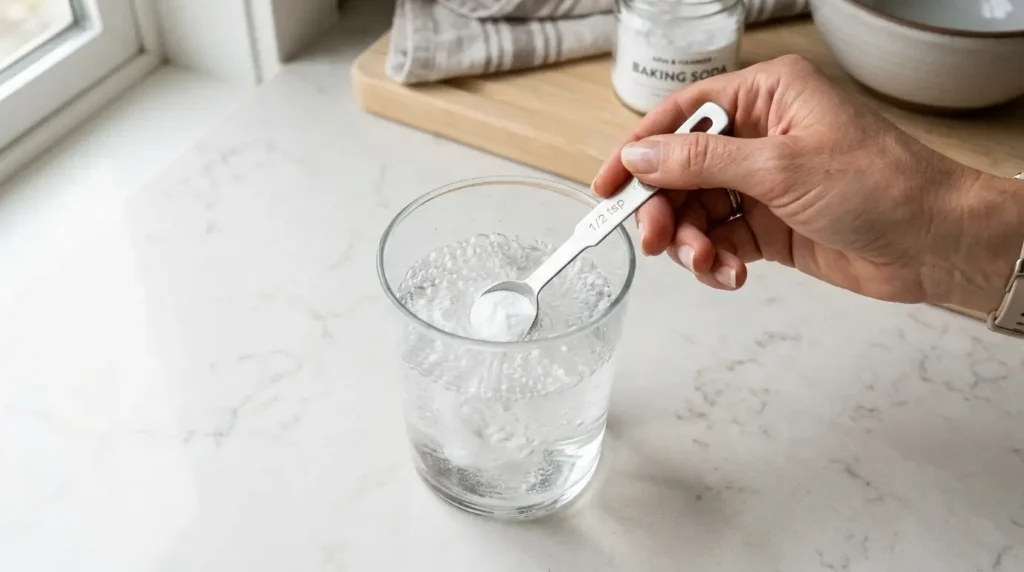
If a doctor has told you occasional use is fine for your situation, the directions on a current over-the-counter sodium bicarbonate Drug Facts label (the same kind of labeling found on NIH’s DailyMed database) read roughly like this:
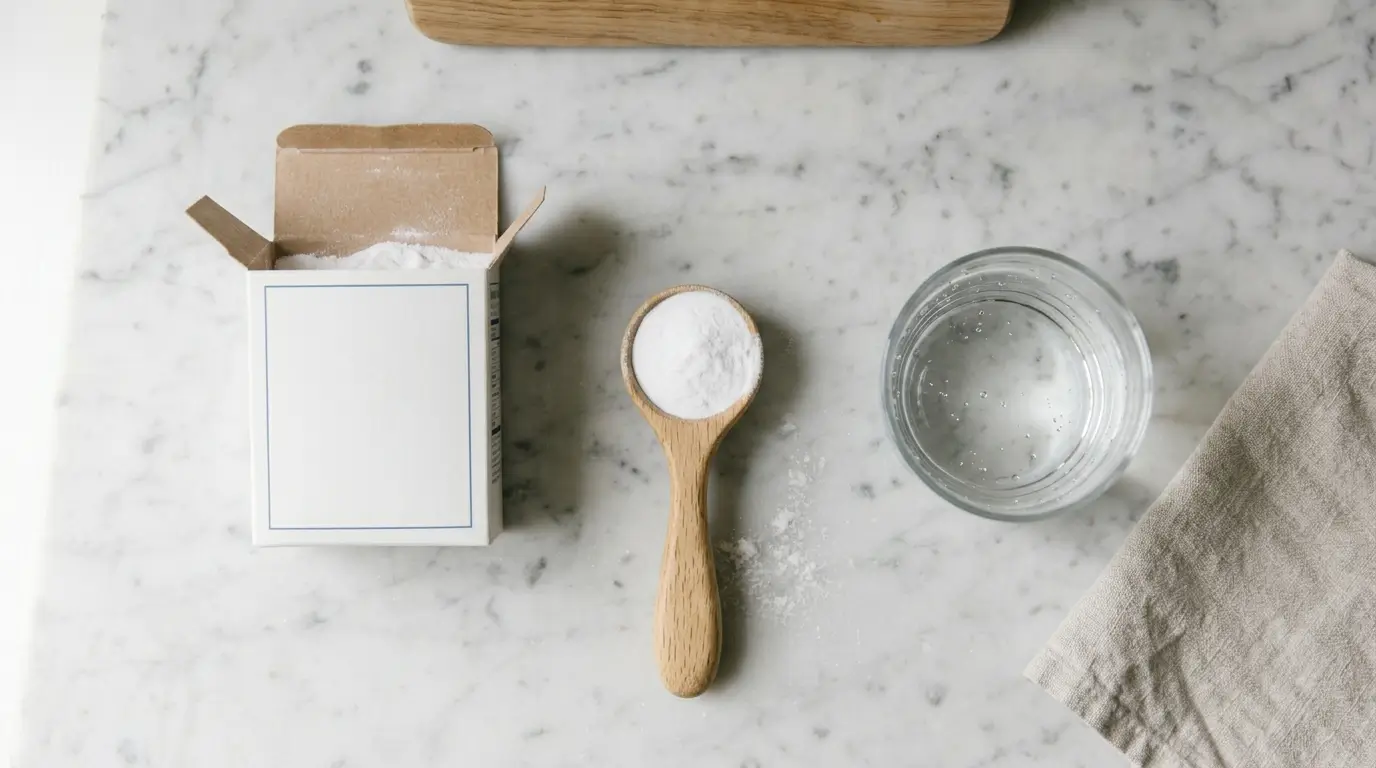
- Dissolve ½ level teaspoon completely in 4 fl. oz. (½ cup) of water.
- May be repeated every 2 hours, up to the daily maximum.
- Daily maximum: no more than six ½-teaspoon doses (3 teaspoons total) in 24 hours for people under 60, or three ½-teaspoon doses (1½ teaspoons total) for people 60 and older.
- Stop and consult a doctor if you’ve needed the maximum dose for two weeks, or if severe stomach pain develops after taking it.
Two warnings on the label are easy to skim past but matter:
- The powder must be fully dissolved before drinking. The label calls this a “stomach warning” — taking it before it’s dissolved, or taking it when your stomach is already very full from food or drink, risks serious injury from the gas the reaction produces.
- Labels vary by brand. Some products set the daily maximum slightly differently, and the age cutoff for children without a doctor’s involvement ranges from 5 to 12 depending on the product. Always check the actual Drug Facts panel on what’s in front of you rather than relying on a general guide — including this one.
None of this is a recommendation that everyone should be doing this regularly. It’s a description of what the product is labeled to do, for the narrow occasional-use case the label covers.
Who Should Avoid Baking Soda for Acid Reflux (FDA Warnings)

The core issue with baking soda as an antacid isn’t the bicarbonate — it’s the sodium that comes attached to it.
The sodium math. A ½-teaspoon dose of baking soda contains roughly 600–630 mg of sodium (a full teaspoon is close to 1,200 mg). The American Heart Association recommends most adults stay under 2,300 mg of sodium per day, with an “ideal” limit closer to 1,500 mg. A single day at the OTC label’s maximum — six ½-teaspoon doses — works out to roughly 3,600–3,800 mg of sodium from the antacid alone, before counting anything you eat. That’s more than a full day’s “ideal” sodium budget from one product.
That math is why several groups of people should talk to a doctor before reaching for baking soda, not after:
- High blood pressure (hypertension). Extra sodium works directly against blood pressure management.
- Heart failure. StatPearls’ review of antacids notes that sodium and fluid retention from sodium-containing antacids can worsen congestive heart failure.
- Kidney disease. The kidneys regulate sodium and bicarbonate balance; when they’re not working at full capacity, that extra load is harder to clear, raising the risk of electrolyte imbalances and metabolic alkalosis (blood becoming too alkaline).
- Anyone on a sodium-restricted diet. The OTC label itself instructs people on a sodium-restricted diet to ask a doctor before use.
- Pregnant people. Mayo Clinic’s drug reference flags that sodium bicarbonate can worsen fluid retention associated with toxemia of pregnancy. Occasional use should only happen with a clinician’s go-ahead — your OB or midwife can suggest pregnancy-appropriate alternatives.
- Young children. OTC labels generally restrict use without a doctor’s involvement, though the exact cutoff (5 vs. 12 years old) varies by brand — check the label.
- Adults 60 and older. The lower daily maximum (three ½-teaspoon doses instead of six) reflects that aging kidneys clear sodium less efficiently.
Medication interactions. Because sodium bicarbonate changes how acidic both the stomach and the urine are, it can change how the body absorbs or eliminates other drugs. StatPearls notes that it can speed up elimination of acidic drugs (such as aspirin), potentially reducing their effect, while slowing elimination of basic drugs (such as amphetamines or the heart medication quinidine), which can allow them to build up. The general rule on OTC labels — separate antacids from other oral medications by at least 1–2 hours, and ask a pharmacist if you take prescription drugs regularly — exists for exactly this reason.
Signs of overuse (metabolic alkalosis) include headache, confusion or unusual irritability, muscle twitching or spasms, and persistent nausea. If these appear during normal use, stop and call a doctor. For accidental large overdoses, the label directs people to seek immediate medical care or contact Poison Control (1-800-222-1222 in the U.S.).
A note on dental health
Frequent reflux doesn’t stay confined to the esophagus. A 2022 study on GERD and dental erosion found that refluxed acid — which can reach a pH low enough to dissolve enamel — is a documented cause of tooth erosion, typically starting on the back surfaces of the upper front teeth. If reflux is a regular occurrence for you, it’s worth mentioning to your dentist. It’s also a reason to be gentle with your oral-care routine rather than reaching for anything abrasive: our guides to homemade baking soda toothpaste and whitening teeth safely with baking soda both cover how to do that without adding to enamel wear that may already be underway.
Baking Soda vs. Other Heartburn Remedies
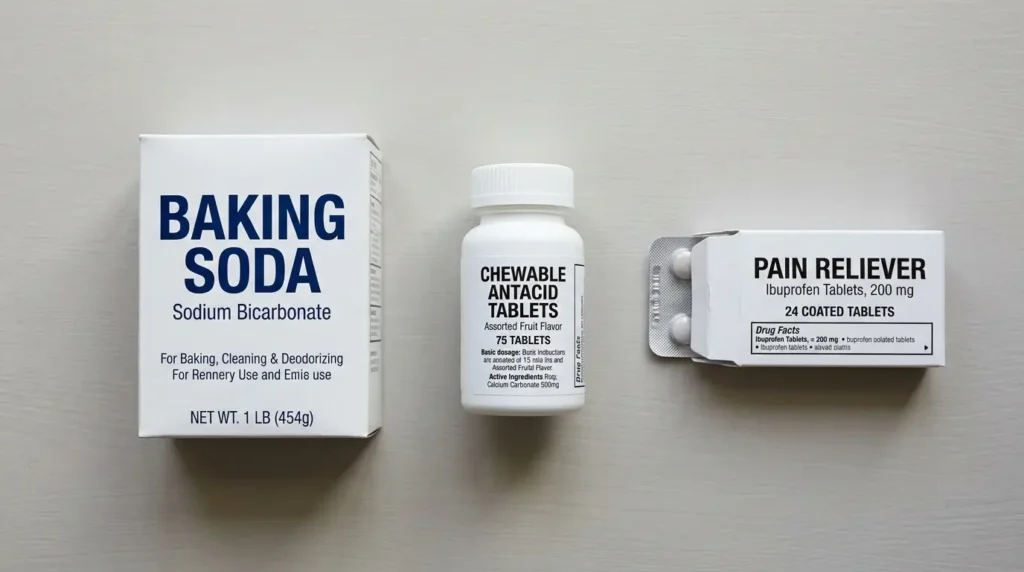
Baking soda isn’t the only option, and it isn’t always the right one. Here’s how it compares, in broad strokes — this isn’t a recommendation for any individual situation, which is a conversation for a doctor or pharmacist.
- Sodium bicarbonate (baking soda). Fastest-acting of the common antacids, but the effect is also the shortest-lived, and it carries the highest sodium load of the group relative to the dose. Best suited to a single, occasional episode.
- Calcium carbonate (e.g., Tums). Also fast, with somewhat longer buffering. Calcium carbonate is the antacid most consistently associated with acid rebound in the research literature — a 1992 reappraisal in PubMed discusses this in detail — and repeated high doses raise separate concerns about excess calcium intake.
- H2 blockers (e.g., famotidine). A different mechanism: rather than neutralizing acid that’s already there, they reduce how much acid the stomach produces over the following hours. Often used OTC for more frequent symptoms than a single antacid dose is meant to cover.
- Proton pump inhibitors (e.g., omeprazole). The strongest acid-suppressing option, available OTC as a 14-day course (mirroring baking soda’s own duration limit) or longer-term under medical supervision for diagnosed GERD.
- Lifestyle changes. NIDDK points to managing weight, avoiding lying down for 2–3 hours after eating, and identifying personal trigger foods as approaches that address contributing factors rather than the acid itself.
The throughline: every antacid, including baking soda, is built for the occasional flare-up. Once reflux becomes frequent, the evidence points toward acid-reducing medication and lifestyle changes — ideally with a doctor involved to rule out GERD or something else entirely.
What About Baking Soda and Lemon Water?
The “baking soda and lemon water” combination shows up a lot in general wellness content, and it’s worth a quick chemistry check in the context of reflux specifically.
Lemon juice is acidic (it’s mostly citric acid). When you mix it with baking soda, the two react with each other immediately — that’s the fizzing. By the time the fizzing settles and you drink the result, a meaningful portion of the baking soda has already been spent neutralizing the lemon juice’s acid, rather than being available to neutralize stomach acid afterward.
For reflux specifically, that means a baking-soda-and-lemon drink isn’t a “stronger” version of the antacid described above — if anything, plain water is the closer match to how the OTC product is actually labeled to be used. The broader claims attached to lemon-and-baking-soda drinks (general “alkalizing,” energy, etc.) aren’t specific to heartburn and aren’t backed by the kind of evidence discussed in this article. We’ve covered that trend and what the research actually supports in our lemon and baking soda drink guide, if you’ve seen it elsewhere and were curious.
When Acid Reflux Needs More Than Baking Soda
A few signals mean it’s time to talk to a doctor rather than reach for the box again:
- Frequency. Mayo Clinic advises seeing a doctor if reflux symptoms happen more than twice a week, or if over-the-counter treatment and lifestyle changes aren’t enough.
- “Alarm” symptoms. The Mayo Clinic Proceedings review lists difficulty or pain when swallowing, unintended weight loss, vomiting blood or material resembling coffee grounds, black or tarry stools, and persistent vomiting as symptoms that warrant prompt evaluation regardless of how often reflux otherwise occurs. Chest pain deserves the same urgency — it can be a heart problem rather than reflux, and that distinction isn’t one to guess at.
- Esophageal damage. Mayo Clinic notes that ongoing acid exposure can lead to inflammation (esophagitis), narrowing (strictures), and in some cases precancerous changes in the esophageal lining (Barrett’s esophagus) — none of which an antacid addresses.
- Hitting the two-week limit. If you’ve needed the maximum dose of baking soda (or any antacid) for two weeks straight, that’s the label’s built-in signal to get evaluated rather than continue.
Frequently Asked Questions
Does baking soda actually work for heartburn?
Yes, for occasional heartburn. The chemistry — sodium bicarbonate neutralizing stomach acid — is well-established, and it’s recognized by the FDA as an over-the-counter antacid for exactly this use. Relief is typically fast but doesn’t last long.
How much baking soda should I take for acid reflux?
Current OTC labeling directs ½ a level teaspoon fully dissolved in 4 fl. oz. (½ cup) of water, repeatable every 2 hours, with a 24-hour maximum of six doses for adults under 60 or three doses for adults 60 and older. Brands vary slightly, so check the Drug Facts panel on the product you have, and don’t exceed the maximum without a doctor’s input.
Is it safe to use baking soda for heartburn every day?
No. The label itself caps regular use at two weeks before recommending you see a doctor. The sodium content adds up quickly against recommended daily limits, and using it daily can mask a condition — like GERD — that needs its own diagnosis and treatment.
Can baking soda cure GERD?
No. Baking soda neutralizes acid that’s already present, but it doesn’t address what’s causing reflux in the first place — typically a weakened lower esophageal sphincter, hiatal hernia, or related factors. GERD is generally managed with medication (such as H2 blockers or PPIs) and lifestyle changes under a doctor’s guidance.
Is baking soda or Tums better for heartburn?
They work differently rather than one being simply “better.” Baking soda acts faster but wears off sooner and carries more sodium per dose; calcium carbonate (Tums) buffers a bit longer but is the antacid most associated with acid rebound in research, and high repeated doses raise separate concerns about calcium intake. For anything beyond occasional use, that comparison is worth having with a pharmacist or doctor rather than deciding alone.
Is it safe to use baking soda for heartburn during pregnancy?
Generally, no — not without checking with your OB or midwife first. The sodium content can worsen fluid retention and blood pressure during pregnancy, which is part of why Mayo Clinic’s drug reference flags it as a caution for toxemia of pregnancy. Pregnancy-appropriate antacid options exist — ask your provider which one fits your situation.
The Bottom Line
Baking soda does help with acid reflux in the narrow sense that matters most: for an occasional bout of heartburn, dissolving ½ teaspoon in water genuinely neutralizes stomach acid, fast, and that’s backed by both basic chemistry and decades of FDA recognition as an OTC antacid. What it doesn’t do is treat GERD, hold up as a daily habit, or work the same way for everyone — its sodium content alone rules it out as a routine option for people with high blood pressure, heart or kidney disease, or who are pregnant, and it can interact with other medications. If reflux is showing up more than twice a week, that’s information your stomach is giving you that’s worth bringing to a doctor — not a reason to reach for a bigger spoon.