
Lemon juice and baking soda mixed in water produce a fizzy, mildly alkaline drink that has been recommended online for everything from improved digestion to cancer prevention. Some of those claims have real chemistry behind them. Most are significantly overstated. A few are simply wrong.
This article covers the recipe, what actually happens when the two ingredients meet, what the evidence says about the genuine benefits, what it says about the popular overclaims, and the safety considerations that are rarely mentioned in wellness-focused coverage of this drink.
This article is for general informational purposes and is not medical advice. If you have a health condition — particularly kidney disease, high blood pressure, or acid reflux requiring medical management — consult a physician before regularly consuming baking soda.
Table content
What happens when lemon juice meets baking soda
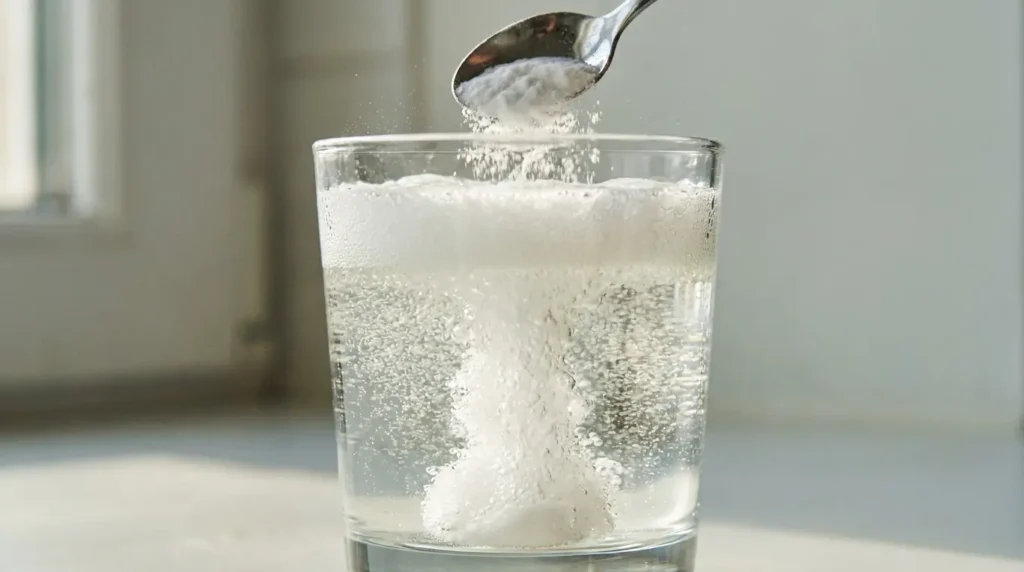
Lemon juice is acidic — mostly citric acid, with a pH typically between 2 and 3. Baking soda is sodium bicarbonate, a mild base with a pH of around 8.3 in water. When you combine them, an acid-base neutralization reaction occurs immediately:
citric acid + sodium bicarbonate → sodium citrate + water + carbon dioxide (CO₂)
The CO₂ is what produces the fizzing. The resulting liquid contains sodium citrate dissolved in water — a compound that is mildly alkaline (typically pH 6.5–7.5 depending on the ratio of lemon to baking soda) and is itself used medically as a urinary alkalizer and electrolyte source.
This chemistry matters for understanding what the drink can and can’t do. The lemon juice and the baking soda have largely reacted with each other by the time you drink the mixture — you’re not consuming a glass of lemon juice plus a glass of baking soda simultaneously. You’re consuming sodium citrate solution with whatever excess acid or base remains from an imperfect neutralization. The specific ratio of ingredients determines whether the final drink is slightly acidic, roughly neutral, or mildly alkaline.
For a deeper explanation of what baking soda is at the chemical level, the complete guide to what baking soda is covers the relevant acid-base chemistry in plain English.
The recipe

There is no single standardized recipe — ratios vary across sources. The most commonly cited version, and the one that produces a roughly neutral final pH, is:
Ingredients (1 serving):
- ¼ teaspoon baking soda
- 2 tablespoons (30 ml) fresh lemon juice — approximately half a medium lemon
- 1 cup (240 ml) cold or room-temperature water
- Optional: a pinch of salt, a teaspoon of honey, or a few mint leaves
Method: Add the lemon juice to the water first. Then add the baking soda and stir immediately — it will fizz. Drink while still fizzing if you want the carbonated effect, or wait for the fizzing to subside if you prefer a still drink. Either is fine. The chemistry completes whether or not you drink it immediately.

On the ratio: using more baking soda relative to lemon juice makes the drink more alkaline and can leave a slightly soapy or salty taste from excess sodium bicarbonate. Using less baking soda leaves more unreacted citric acid and a more tart flavor. The ¼ teaspoon to 2 tablespoon ratio is close to the stoichiometric balance point for full neutralization — though exact ratios vary with the acidity of individual lemons.
Warm vs. cold: some guides recommend warm water. Warm water dissolves baking soda slightly more readily, but there is no meaningful difference in how the chemistry works. Use whichever temperature you find more palatable.
What the evidence actually shows
As an antacid: well-supported
This is the most legitimate use case. Sodium bicarbonate — the active compound that results from the reaction — is an FDA-approved over-the-counter antacid. It neutralizes excess stomach acid quickly and effectively. The same compound is the active ingredient in Alka-Seltzer.
For occasional heartburn or acid indigestion, a baking soda drink (with or without lemon) provides rapid symptomatic relief. The lemon-baking soda version works the same way, because the neutralization reaction produces sodium citrate, which also acts as a mild antacid and is itself used in some commercial antacid formulations.
What the evidence does not support is using this drink as a long-term treatment for chronic acid reflux (GERD). Chronic GERD has structural causes that a neutralizing drink addresses temporarily but not mechanically. Anyone managing GERD regularly should do so under medical supervision.
For digestion and bloating: plausible, limited evidence
The CO₂ produced by the reaction and any residual bicarbonate reaching the stomach can help relieve bloating and gas in some people by encouraging belching — the same principle behind carbonated water providing temporary digestive relief. This is a plausible mechanism with modest anecdotal and indirect support, not a well-studied intervention. It works for some people and not others, and the evidence doesn’t rise to the level of a reliable therapeutic claim.
Vitamin C from lemon juice: real but modest
Half a medium lemon provides roughly 15–20 mg of vitamin C — about 20% of the daily recommended intake. That’s a genuine nutritional contribution, not a negligible one. However, the baking soda reaction partially degrades vitamin C (ascorbic acid is sensitive to both alkaline environments and heat), so the effective vitamin C content of the mixed drink is somewhat lower than in plain lemon juice. If vitamin C intake is the goal, plain lemon juice in water delivers more of it.
“Alkalizing the body”: not how it works
This is the most widely circulated claim and one of the least accurate. The premise is that consuming alkaline substances shifts your body toward a more alkaline state, which is then presented as inherently healthful.
The problem is that the body tightly regulates blood pH within a very narrow range — approximately 7.35 to 7.45 — using multiple buffering systems involving the lungs, kidneys, and blood proteins. Drinking an alkaline beverage does not measurably shift blood pH in healthy people. If it did, to a degree outside that range, the condition would be called alkalosis and would require medical treatment.
What the drink does affect is urine pH — sodium citrate is used medically to alkalinize urine, which is relevant for certain kidney stone types and urinary tract infections. But urinary pH and blood pH are different things, and evidence that alkaline urine improves general health in healthy people is not established.
Weight loss and metabolism: not supported
No credible mechanism connects lemon juice or baking soda — individually or combined — to meaningful weight loss or metabolic change. The caloric contribution is negligible, and there is no research establishing a thermogenic or metabolic effect from this combination.
Cancer claims: no credible evidence, do not repeat
Some online sources claim that alkalizing the body prevents or treats cancer. This claim has no credible scientific support and directly contradicts how blood pH regulation works. It is not covered here because covering it with the degree of debunking it requires goes beyond what this article needs to do — the important point is that this site does not make or repeat that claim.
The sodium content: the overlooked concern
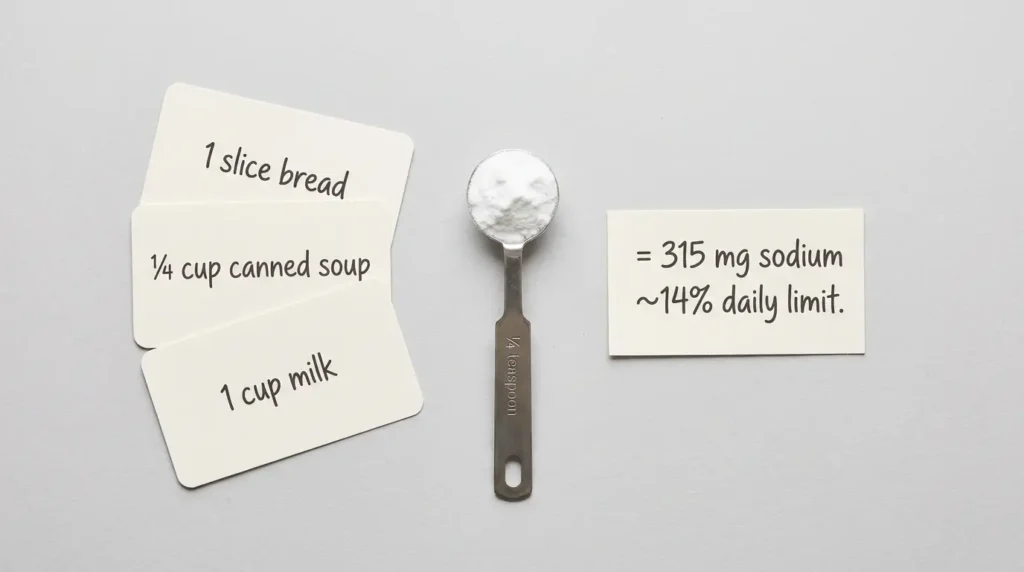
One aspect of this drink that wellness coverage almost universally ignores is the sodium load.
A quarter teaspoon of baking soda contains approximately 315 mg of sodium — about 14% of the American Heart Association’s recommended daily sodium limit of 2,300 mg for most adults. If someone drinks this daily, they’re adding a meaningful amount of sodium to their diet from a source they may not be accounting for.
For most healthy adults, this is not a significant concern. For people on sodium-restricted diets — those managing high blood pressure, heart failure, chronic kidney disease, or edema — it is. Anyone in those categories should speak with their physician before making this a regular habit.
There is also an FDA warning that applies to baking soda used as an antacid: it should not be taken by people who have recently eaten a large meal (risk of stomach rupture in rare cases due to rapid CO₂ generation) and should not be used as an antacid for more than two weeks without medical supervision.
How often is it reasonable to drink this?
There is no established optimal frequency. Occasional use — a few times a week for digestive relief, or simply as a fizzy alternative to plain water — is generally well-tolerated by healthy adults. Daily habitual use over extended periods has not been well-studied, and the cumulative sodium intake from daily consumption is worth considering.
Do not exceed ½ teaspoon of baking soda per dose, and do not take more than 3½ teaspoons in a 24-hour period (per the FDA OTC antacid labeling for sodium bicarbonate). This is the same guidance that applies to baking soda used without lemon juice.
Does lemon add anything beyond flavor?
Yes, in two specific ways: the lemon juice determines the final pH of the drink (more lemon = more citric acid = lower final pH, more tart flavor; less lemon = higher final pH, more alkaline, slightly soapy taste), and the citrate produced in the reaction is the compound that may be responsible for the urinary alkalinizing effect. Plain baking soda in water produces sodium bicarbonate solution; lemon plus baking soda produces sodium citrate solution — a chemically distinct outcome with somewhat different properties.
Whether that difference matters for the purposes most people drink this beverage is unclear. For taste, many people find the lemon version more palatable than plain baking soda water. For the antacid function, both work.
Common questions
Can I add honey or other sweeteners?

Yes. Honey, maple syrup, agave, or a pinch of stevia don’t affect the core chemistry. Honey adds its own mild acidity, which may slightly alter the final pH but not meaningfully. If the taste of the unsweetened version is off-putting, a small amount of honey makes it considerably more palatable without changing what the drink does.
Can children drink this?
In small, occasional amounts, a diluted lemon-baking soda drink is not harmful to children. However, the sodium content is proportionally higher relative to a child’s lower sodium allowance, and there is no established benefit for children that plain lemon water wouldn’t provide. It’s not recommended as a regular habit for children.
Does it matter if I use bottled lemon juice vs. fresh?
Fresh lemon juice is preferable — bottled juice often contains preservatives (citric acid, sodium benzoate) that don’t affect safety but do alter the flavor profile. The chemistry is the same either way.
What if I accidentally add too much baking soda?
The excess baking soda that doesn’t react with the lemon juice remains as unreacted sodium bicarbonate in solution. The drink will taste distinctly salty and soapy. It’s safe to drink but unpleasant. Adjust the ratio with more lemon juice or start over.
The lemon-baking soda combination is one of several ingredient pairings worth understanding at the chemical level rather than through wellness claims. For the broader look at what baking soda does when mixed with other common ingredients — including the vinegar combination that most people know from cleaning — the combinations hub covers each pairing with the same evidence-focused approach.