Plain water removes visible dirt. A baking soda wash removes what you can’t see — pesticide residue, agricultural wax coatings, and surface bacteria that cling to produce even after a thorough rinse. The method is simple, the ingredient is cheap, and the research supporting it is solid. What changes from one type of produce to the next is the ratio, the soak time, and the amount of physical contact that’s appropriate for the texture of what you’re washing.
This guide covers the universal method, the science behind why it works, and the specific adjustments for every major category of produce — from delicate soft berries to waxy apples to leafy greens.
Table content
Why baking soda works on produce
Baking soda is sodium bicarbonate — a mildly alkaline powder with a pH of around 8.3 in water. That alkalinity is what makes it useful as a produce wash. Many common agricultural pesticides, particularly organophosphates and organochlorines, are chemically degraded by alkaline environments. The baking soda solution doesn’t just dilute residue the way water does — it actively breaks down certain pesticide compounds and lifts them from the surface.
The foundational research on this comes from a 2017 study published in the Journal of Agricultural and Food Chemistry, which tested baking soda solution, tap water, and a bleach solution against thiabendazole and phosmet — two widely used fungicides and insecticides — on apples. After a 12–15 minute soak, the baking soda solution removed significantly more residue than either alternative. Crucially, some pesticide penetration had already reached below the peel, which no surface wash could reach — but for surface residue, baking soda was the clear winner.
Two things to be clear about: a baking soda wash is not a sterilization method, and it cannot reach sub-surface pesticides that have absorbed into the flesh. What it does — efficiently and with a single pantry ingredient — is remove the majority of surface contamination from most produce types. For the broader picture of what baking soda does at the chemical level, the complete guide to what baking soda is covers the relevant chemistry.
The universal ratio and method
The baseline baking soda fruit wash applies to most firm produce:
1 teaspoon baking soda per 2 cups (475 ml) cold water
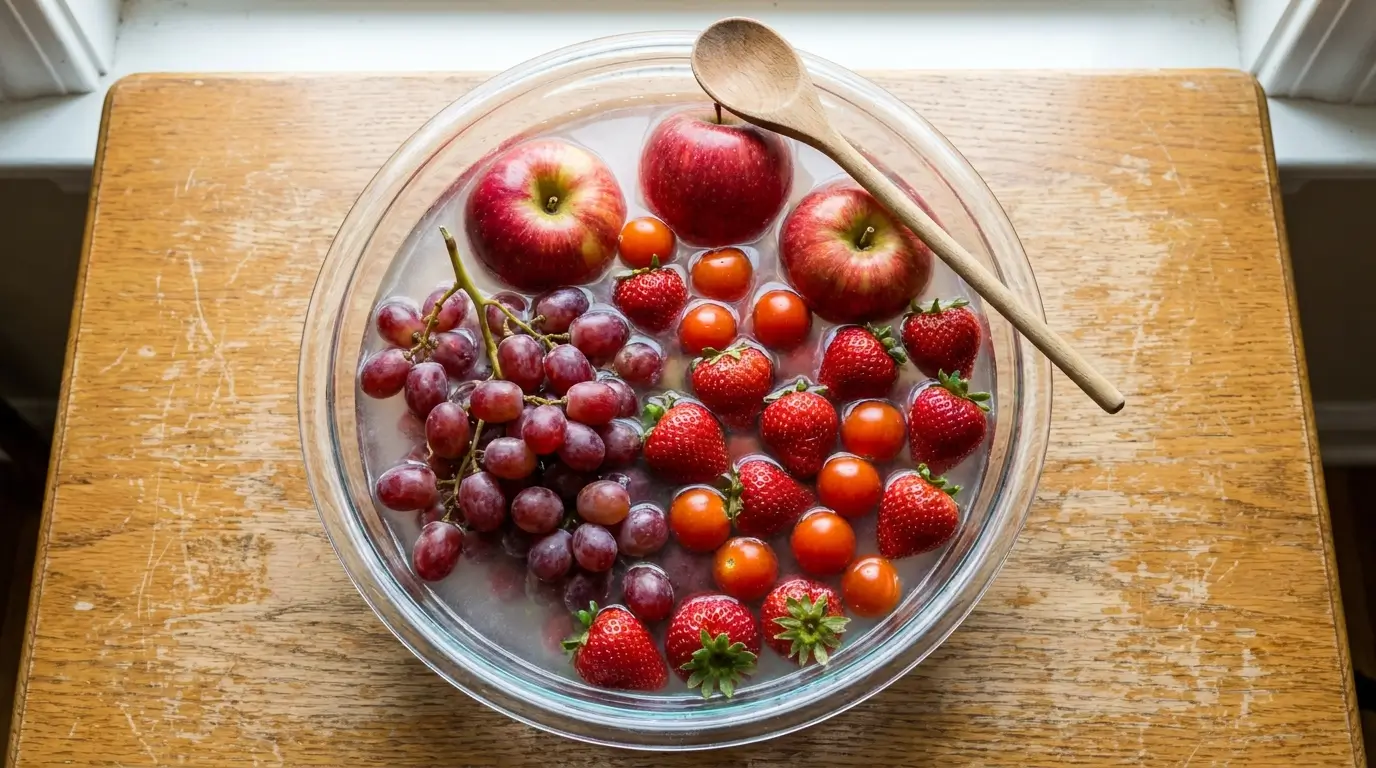
Stir briefly to dissolve, add the produce, soak for the appropriate time (see the produce-specific section below), then rinse thoroughly under cold running water. That’s the complete method for the majority of fruit and vegetables you’ll wash this way.
Three consistent rules apply regardless of produce type:
Always use cold water. Warm or hot water softens produce, opens surface pores (which can draw in dissolved contaminants rather than lifting them off), and accelerates breakdown. Cold water keeps texture firm and the wash working at the surface level where it should be.
Rinse thoroughly after soaking. The point of the wash is to lift residue off the surface; the rinse removes what was lifted. Skipping or shortening the rinse leaves loosened material — and a faint alkaline taste — on the produce. Rinse for at least 20–30 seconds under running cold water, turning the produce to cover all surfaces.
Wash immediately before eating, not before storing. Washing removes natural protective coatings (wax, bloom) and introduces moisture — both of which shorten shelf life. The only exception is if you’re washing before freezing, in which case washing first is fine.
Produce-specific method and timing
Soft berries: strawberries and blueberries
Soft berries are the most commonly washed produce category and the one where technique matters most, because both over-soaking and rough handling cause texture damage.
Strawberries benefit from a standard ratio (1 tsp per 2 cups water) and a 5–15 minute soak. The longer end of that range — 12–15 minutes — mirrors the research protocol and provides maximum residue removal. Strawberries are firm enough to handle a full soak without significant texture change. Leave the hulls on during soaking; removing them first creates an opening for water to enter the berry. Full method details: how to clean strawberries with baking soda.
Blueberries need a shorter soak (2–3 minutes, 5 minutes maximum) and a slightly weaker solution (½ tsp per 1 cup water). Their thinner, more permeable skins absorb liquid faster than strawberry skin does, and their natural waxy coating — the bloom — is worth preserving as much as possible. Handle gently throughout: place them in the solution rather than pouring them in, swirl rather than stir, and drain into a fine-mesh strainer to avoid losing berries through colander gaps. Full method: how to wash blueberries with baking soda.
Grapes and cherries follow the strawberry protocol — standard ratio, 5 minutes minimum, up to 15 minutes — but stay on the bunch or stem during soaking. Removing grapes before washing increases the surface area where water enters through the stem scar and accelerates spoilage after washing.
Raspberries and blackberries are the most fragile soft fruit. Limit soak time to 1–2 minutes and use the weaker blueberry ratio. The hollow interior of raspberries makes them particularly susceptible to water absorption. Handle only by swirling the bowl; never press or stir.
Firm fruit with edible skins: apples, pears, peaches, nectarines
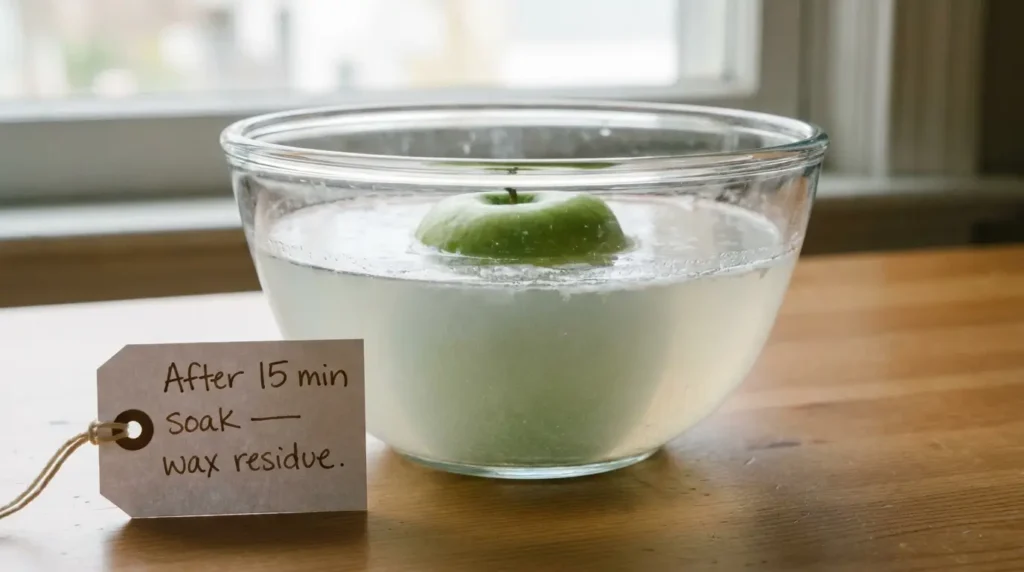
These are the produce types closest to the original research protocol and the ones where a baking soda wash provides the clearest benefit.
Use the standard ratio and soak for 12–15 minutes — the full research-validated window. Firm-skinned fruit tolerates this without any texture or flavor penalty. For apples and pears, a soft produce brush can be used gently during or after the soak to remove wax coating and any residue lodged in the stem or calyx (the top and bottom indentations). For peaches and nectarines, skip the brush — the fuzzy or smooth skin is thin enough that brushing causes bruising.
Commercially sold apples in the US are almost universally coated in food-grade wax (carnauba or shellac-based) to extend shelf life. The baking soda wash softens this coating and makes it easier to rinse off, which is why the water sometimes turns faintly milky or slick after washing waxed apples. This is normal and safe to rinse away.
Citrus: oranges, lemons, limes, grapefruit
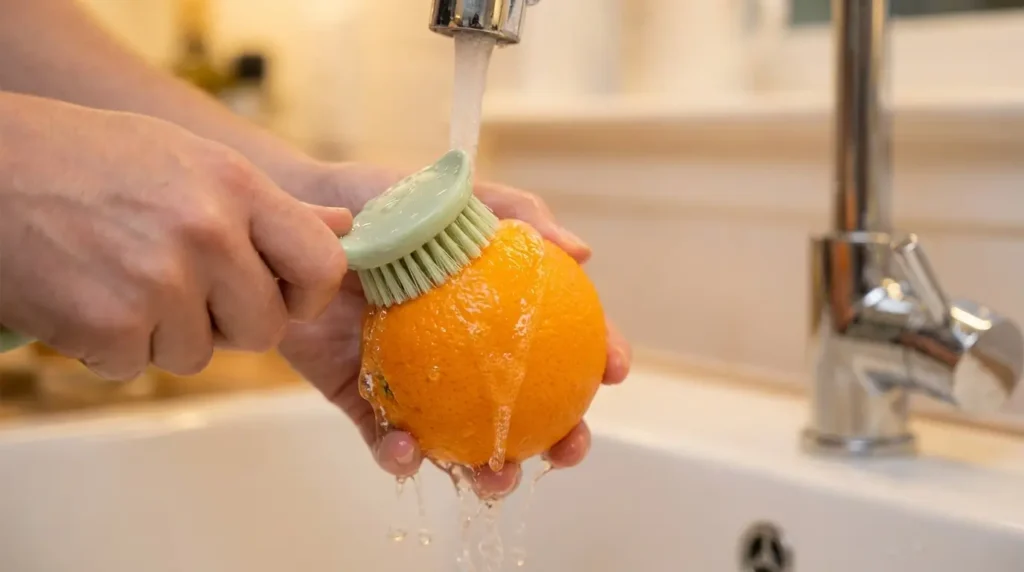
If you’re eating the flesh and discarding the peel, a baking soda wash is still worthwhile — your hands and cutting board contact the peel during slicing, and those surfaces transfer residue. If you’re zesting or using the peel in recipes, it becomes essential.
Standard ratio, 2–3 minute soak, firm scrub with a produce brush under the running-water rinse. Citrus peel is thick and resilient; you can apply more pressure than you would with stone fruit.
Hard vegetables: carrots, celery, cucumbers, potatoes, beets
Hard vegetables with dense, resilient skins handle the full 12–15 minute soak comfortably. Cucumbers — conventionally grown — are typically waxed, making the baking soda soak particularly useful for breaking down that coating before eating the skin.
A produce brush is appropriate for root vegetables (carrots, potatoes, beets) with visible soil embedded in surface irregularities. Scrub under the running water rinse after the soak, not during — scrubbing during the soak just moves debris back into the solution rather than removing it.
Tomatoes and bell peppers
Smooth-skinned, firm produce like tomatoes and bell peppers: standard ratio, 3–5 minute soak, rinse and rub gently by hand. Pay attention to the stem end, where residue tends to concentrate in the indentation where the cap meets the skin.
Leafy greens: lettuce, spinach, kale, herbs
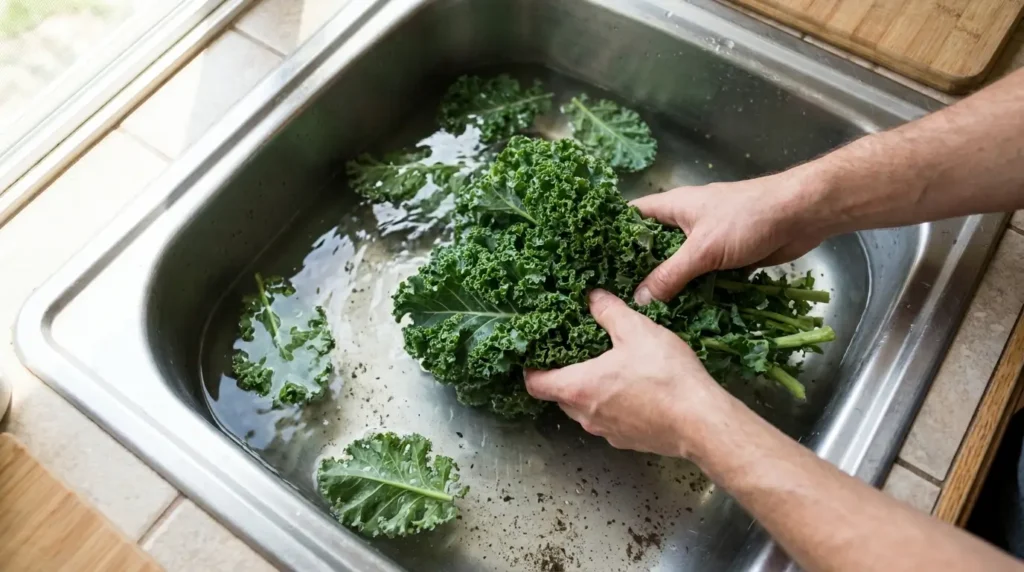
Leafy greens require a different approach because soaking individual leaves is inefficient and the goal is dirt and debris removal as much as pesticide removal.
Add 1 teaspoon of baking soda to a full sink or large bowl of cold water. Submerge the separated leaves and swirl vigorously — enough to dislodge soil without tearing delicate leaves. Soak for 2 minutes, then lift leaves out (don’t pour them into a colander; let the debris sink and leave it in the water). Rinse leaves individually or in a salad spinner under running water.
For hardy greens like kale or collards, the soak can extend to 5 minutes and slightly more vigorous agitation is fine. For tender herbs like basil, keep handling minimal to avoid bruising.
One important caveat for greens: baking soda can cause slight discoloration of delicate greens — particularly basil — if left in contact too long. The chlorophyll can react with the alkaline solution and dull the green color. Keep contact time brief and rinse promptly.
Melons: cantaloupe, watermelon, honeydew
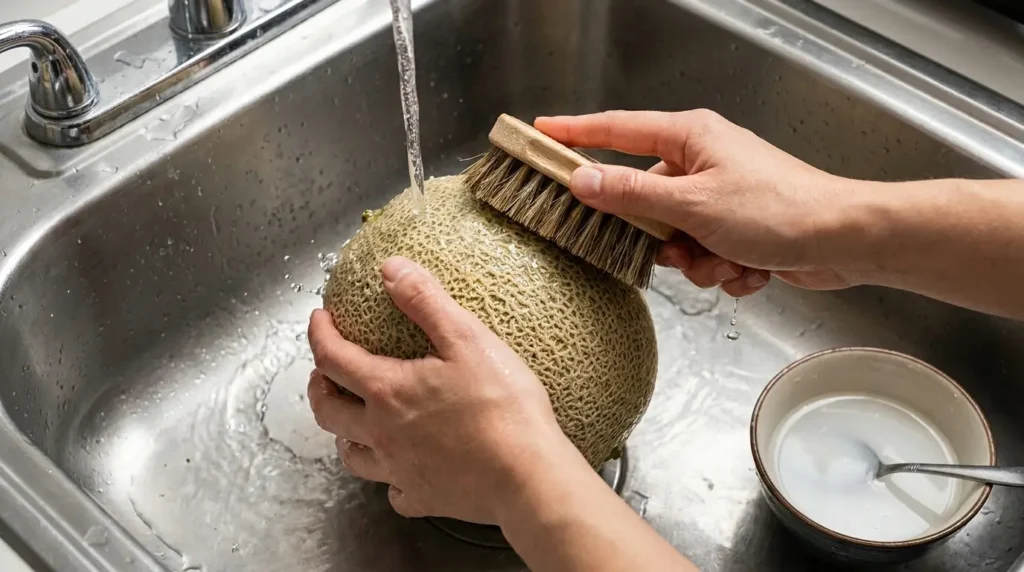
The exterior of a melon might seem irrelevant if you’re not eating the rind — but cutting through an unwashed melon draws surface bacteria and contaminants across the knife and into the flesh. Melons are one of the most common sources of foodborne illness from produce.
Scrub the exterior of whole melons with a produce brush under running water mixed with baking soda solution: pour a little baking soda solution over the surface and scrub with the brush before rinsing. A full bowl-soak isn’t practical for a large melon; brush-washing is the right approach here.
What a baking soda wash doesn’t do
It’s worth being precise about limits:
It doesn’t sterilize. Baking soda solution is not a disinfectant. It reduces surface bacteria populations but does not eliminate them. For produce with serious contamination risk (sprouts, pre-cut items), cooking is the only reliable safety measure.
It doesn’t reach sub-surface pesticides. Some pesticide compounds absorb into produce flesh below the peel level — systemic pesticides designed to protect the plant from within. No wash reaches these. The baking soda wash addresses what’s accessible at the surface.
It doesn’t replace refrigeration or proper storage. Washed produce still needs appropriate storage. The wash removes surface protection, so proper drying and refrigeration are more important after washing than before.
Commercial produce washes vs. baking soda
Marketed produce wash sprays and solutions are widely sold, typically at several dollars per bottle. The active ingredients in most of them are surfactants (soap-like compounds that help lift debris), occasionally with citric acid or other mild acids added.
The available comparative research does not show commercial produce washes outperforming baking soda solution — and several studies show baking soda performing better. The advantage of a commercial product is convenience; the advantage of baking soda is that it’s dramatically cheaper, widely available, and equally or more effective by the research standard. There’s no meaningful reason to buy a commercial produce wash if you have baking soda in your kitchen.
Common questions
Does the baking soda leave a taste on the fruit?
Only if you don’t rinse thoroughly. After a proper 20–30 second rinse under cold running water, there’s no detectable baking soda flavor on any produce type. If you can taste something faintly soapy or mineral, rinse again — it takes an extra 10 seconds and solves the problem completely.
Can I reuse the baking soda wash solution for multiple batches?
No. The solution picks up whatever it removes from the first batch. Reusing it deposits those contaminants onto the next batch. Mix a fresh solution for each wash.
Is there a ratio that works better for very dirty produce?
Increasing the baking soda concentration beyond 1 teaspoon per cup of water doesn’t meaningfully improve pesticide removal — the research benefits plateau at lower concentrations. What does help for heavily soiled produce is extending soak time and using a produce brush during the rinse.
Does washing remove wax from apples? Should it?
The baking soda wash softens and partially removes wax coatings. Whether to remove wax is a personal choice — the wax itself (carnauba or shellac-based) is food-safe, but the residue it traps underneath is what you’re washing away. If you prefer unwaxed apples, buy from farmers’ markets or organic sources, which typically don’t wax.
The produce wash at a glance
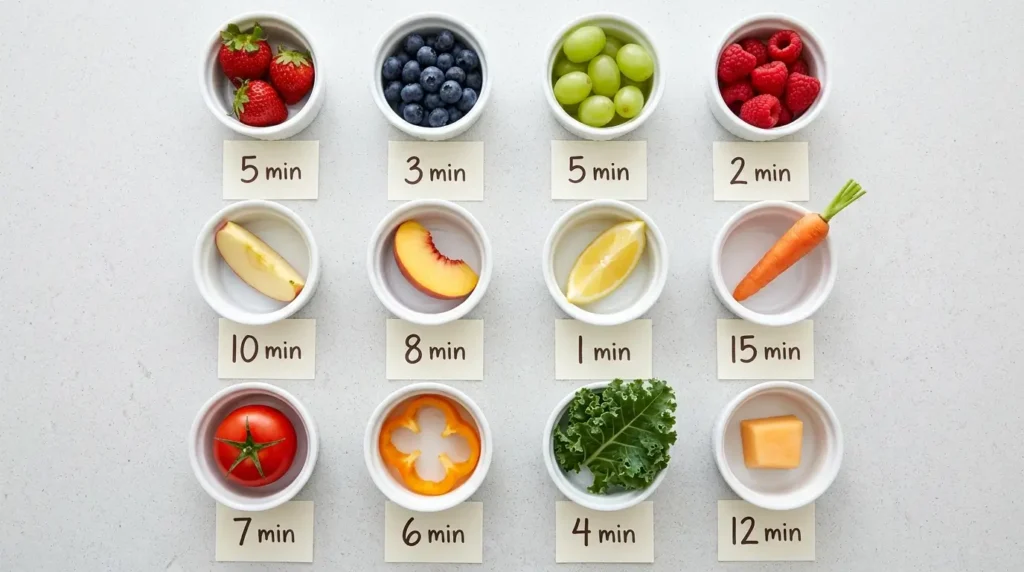
| Produce type | Ratio | Soak time | Notes |
|---|---|---|---|
| Strawberries | 1 tsp / 2 cups water | 5–15 min | Hull on during soak |
| Blueberries | ½ tsp / 1 cup water | 2–3 min | Fine-mesh strainer; preserve bloom |
| Grapes / cherries | 1 tsp / 2 cups water | 5–15 min | Keep on stems |
| Raspberries / blackberries | ½ tsp / 1 cup water | 1–2 min | Handle by swirling only |
| Apples / pears | 1 tsp / 2 cups water | 12–15 min | Brush at stem/calyx; removes wax |
| Peaches / nectarines | 1 tsp / 2 cups water | 12–15 min | No brush; rub gently by hand |
| Citrus | 1 tsp / 2 cups water | 2–3 min | Brush scrub during rinse |
| Hard vegetables | 1 tsp / 2 cups water | 12–15 min | Brush during rinse for root veg |
| Tomatoes / peppers | 1 tsp / 2 cups water | 3–5 min | Focus on stem end |
| Leafy greens | 1 tsp / full sink | 2–5 min | Lift leaves out; let debris sink |
| Melons | Brush wash | N/A | Scrub exterior before cutting |
For produce types covered in detail, see how to clean strawberries with baking soda and how to wash blueberries with baking soda. For the full range of ways baking soda is used in the home — from produce washing to drain cleaning to laundry — the baking soda cleaning hub is organized by task and room.