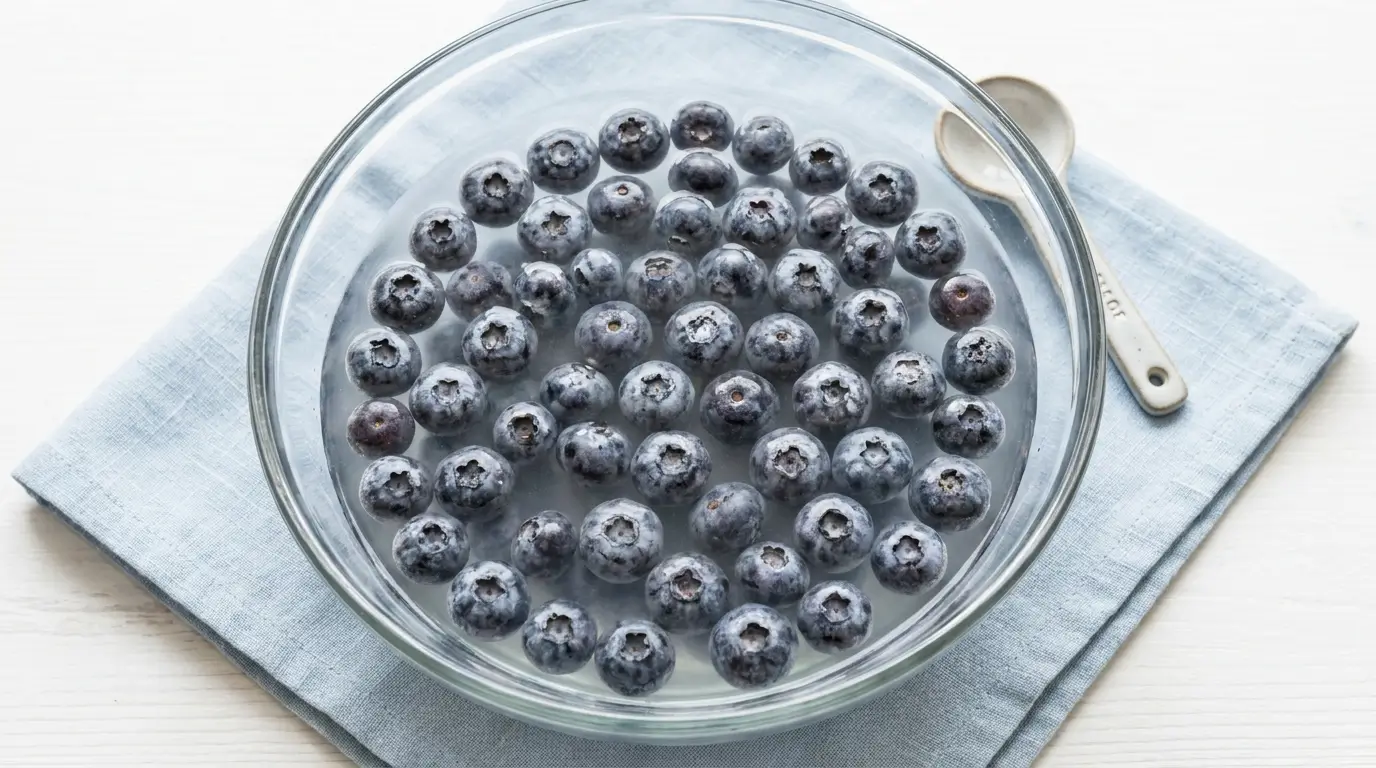
Blueberries need gentler handling than most fruit when it comes to washing — their skins are thin, their natural waxy coating (the bloom) plays an important role in freshness, and a heavy-handed rinse damages both. A baking soda wash cuts through pesticide residue more effectively than water alone, but technique matters more with blueberries than it does with heartier fruit. Here’s exactly how to do it without bruising the berries or stripping the protective coating you actually want to keep.
Table content
The bloom: what it is and why it matters
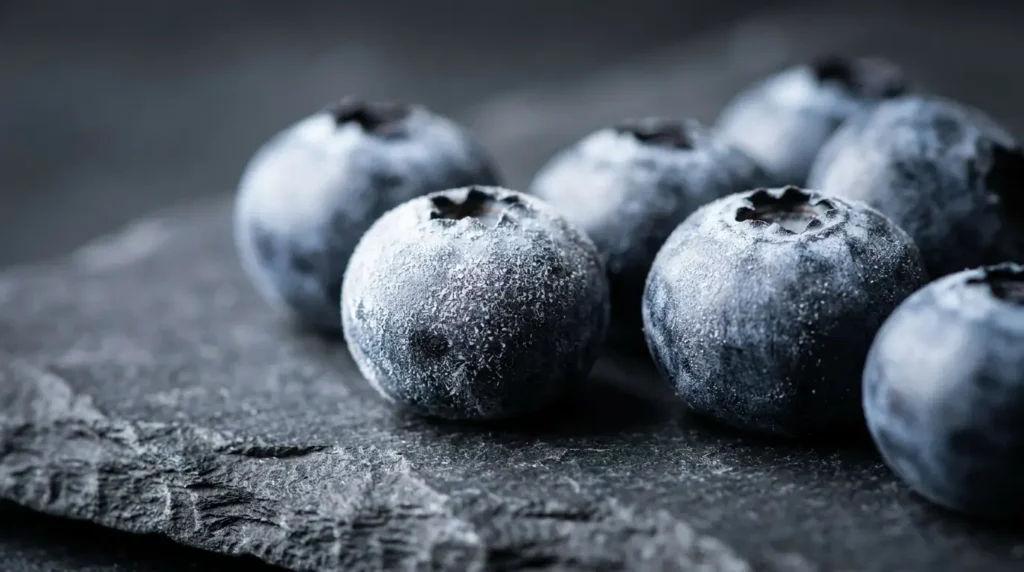
The silvery-white dusty haze on fresh blueberries is called the bloom — a naturally occurring waxy coating that the berry produces itself. It’s not pesticide residue, it’s not dirt, and it’s not something you want to scrub away. The bloom acts as a moisture barrier, slowing water loss and helping resist mold. Berries that lose their bloom deteriorate noticeably faster.
This matters for washing because the goal is selective: remove pesticide residue and surface contaminants while preserving as much of the bloom as possible. A baking soda soak — brief contact time, gentle handling, cold water — does this better than vigorous scrubbing or prolonged soaking, both of which strip the wax layer.
The method
What you need
- ½ teaspoon baking soda
- 1 cup (240 ml) cold water
- A wide, shallow bowl
- A fine-mesh colander or strainer
- Paper towels or a clean kitchen towel
Step 1: Make the solution
Dissolve ½ teaspoon of baking soda in 1 cup of cold water. This is a slightly weaker ratio than the strawberry wash — blueberries have thinner, more permeable skins, and a milder solution reduces the risk of any flavor transfer. If you’re washing a larger batch, scale proportionally: 1 teaspoon per 2 cups of water.
Use cold water only. Warm water softens blueberries quickly and accelerates skin breakdown.
Step 2: Add the blueberries
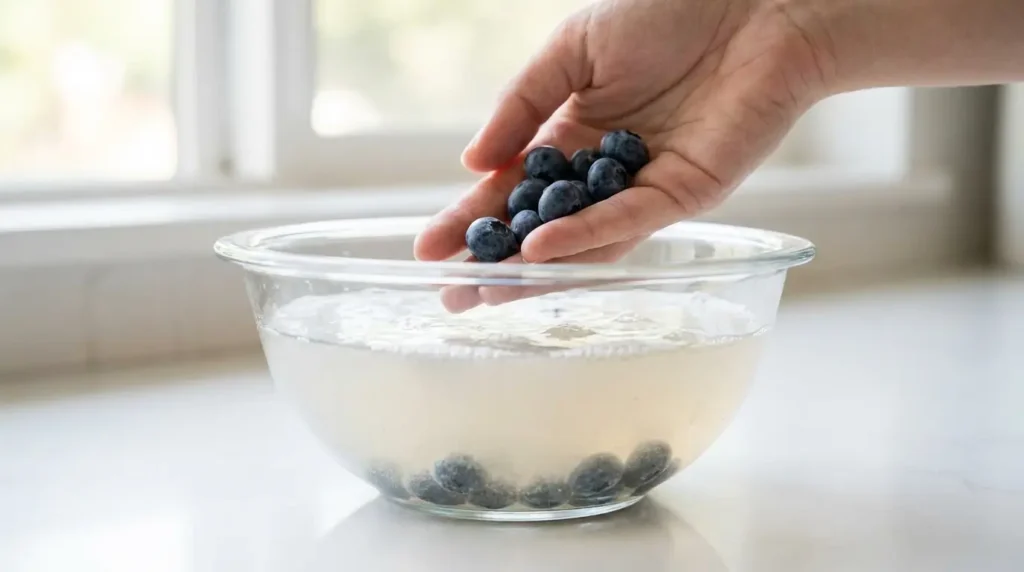
Place the blueberries gently into the solution — don’t drop them from a height or pour them in with force. The goal is minimal agitation. A single layer is ideal; if you have more berries than will fit comfortably, work in batches rather than stacking.
Don’t rinse or dry them beforehand — the baking soda solution handles all of it in one step.
Step 3: Soak for 2–3 minutes
Blueberries need a shorter soak than strawberries. Because their skins are thinner and more permeable, extended soaking begins to draw moisture into the berry, diluting flavor and softening texture. Two to three minutes is enough contact time to lift surface residue without affecting quality. If the berries are from a particularly high-residue source and you want to extend the soak, cap it at 5 minutes maximum.
While the berries soak, swirl the bowl gently once or twice — this moves solution across the surface without the physical contact of a scrub brush or fingers pressing down on skins.
Step 4: Drain and rinse
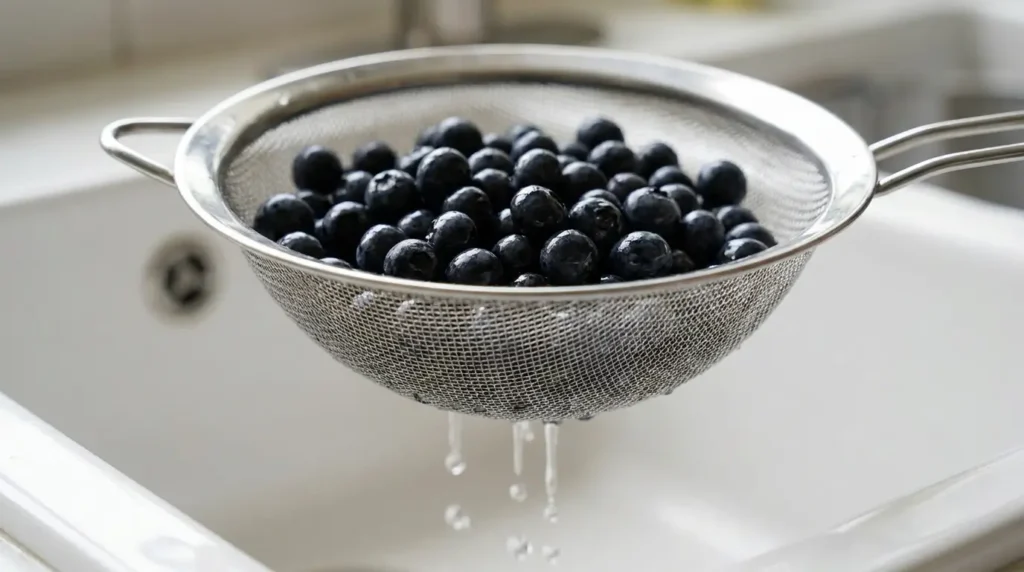
Lift the berries into a fine-mesh colander and rinse under cold running water for 20–30 seconds, turning and swirling gently. The fine mesh is important — blueberries will roll through the gaps of a standard colander, especially if any have softened.
Rinse until there’s no trace of a faintly soapy or mineral taste. A quick taste-test on one berry confirms the rinse is complete.
Step 5: Dry thoroughly before storing
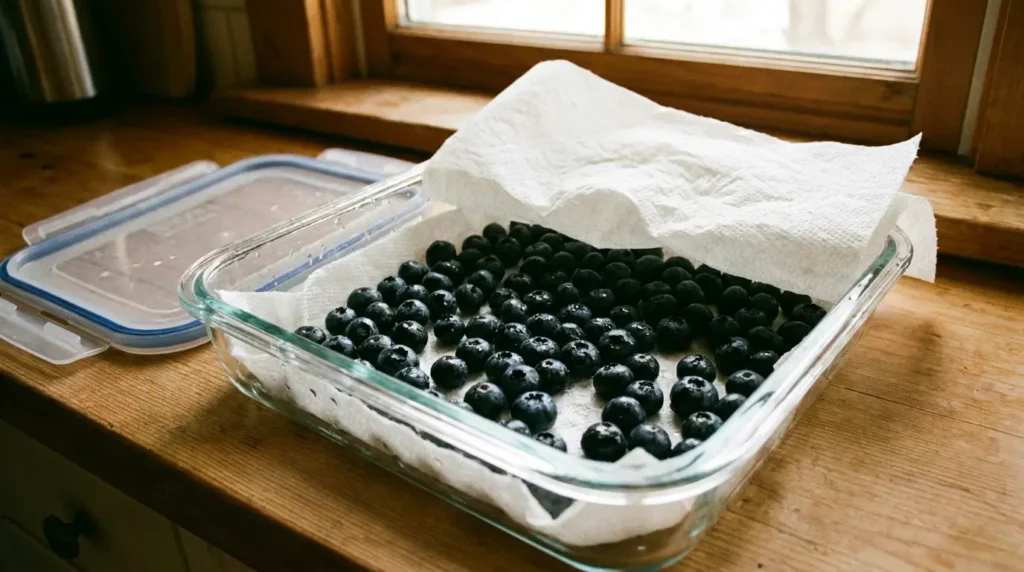
Spread the blueberries in a single layer on paper towels and gently pat the tops. Don’t roll them or press down. Allow them to air-dry for a few minutes — residual moisture is the primary cause of rapid mold development in the fridge.
Once dry, store in a shallow container lined with a paper towel, loosely covered (or vented). Well-dried blueberries washed this way typically keep for 4–6 days in the refrigerator. If you don’t dry them properly, plan to use them within a day.
Blueberries vs. strawberries: key differences in the wash
Blueberries and strawberries share the same fundamental baking soda wash mechanism, but three things are different in practice:
Soak time is shorter. Strawberries benefit from 5–15 minutes of contact time and can handle it without significant texture change. Blueberries start softening at the skin level after 5 minutes. Keep blueberries to 2–3 minutes.
The solution is slightly weaker. The lower ratio reduces any residual alkaline flavor that might transfer through the thinner skin.
Handling is more deliberate. Strawberries are firm enough to swirl freely; blueberries bruise against each other if agitated too vigorously. Gentle movement, not stirring.
For the strawberry method in full detail, see how to clean strawberries with baking soda. The two articles together cover the most commonly washed soft fruits — for everything else, from grapes to apples to leafy greens, the complete baking soda fruit wash guide covers each produce type with its own timing and technique.
Wash before eating, not before storing
This applies to all berries, not just blueberries: wash right before you plan to eat or use them, not when you bring them home from the store. Pre-washed and stored blueberries lose their bloom faster, are more vulnerable to mold, and have shorter shelf life even when dried carefully. The exception is if you’ve bought berries that are already slightly past their prime and you’re planning to freeze them — in that case, washing first makes sense.
If you do need to wash ahead (for meal prep, a recipe, or a large batch), the dry-thoroughly-and-refrigerate protocol above is your best option, with the understanding that you’ll be using them within 4–5 days.
Does washing remove the bloom?
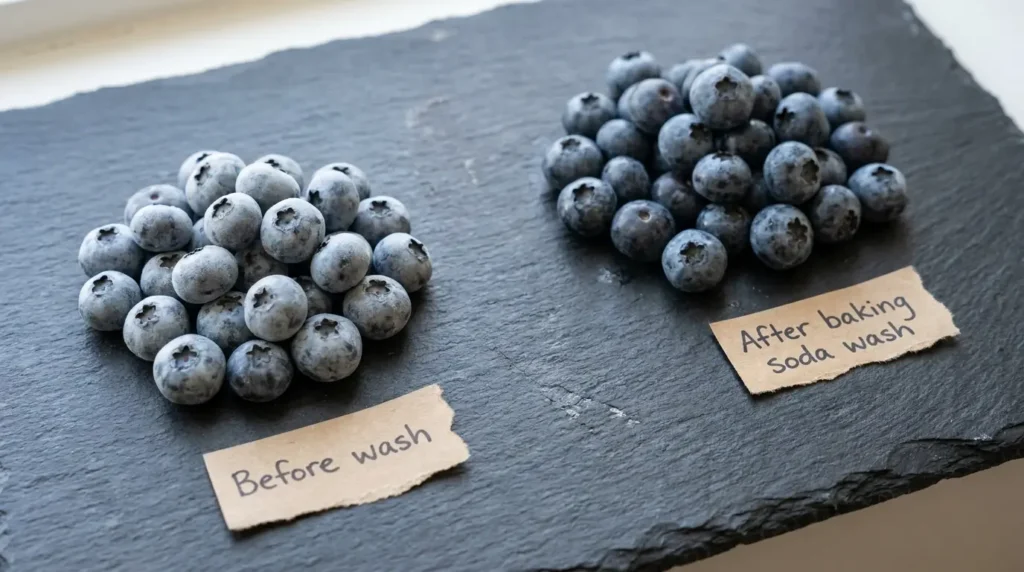
Partially, yes. Any water contact affects the bloom to some degree — this is unavoidable. What the baking soda wash does not do is aggressively strip it the way warm water, dish soap, or mechanical scrubbing would. Cold water, brief contact time, and gentle handling preserve most of the waxy layer. The berries will look slightly less dusty after washing than before, but the structural integrity of the skin — and most of the protective coating — remains intact.
If you notice the bloom is already largely gone when you open the package, the berries have been handled or stored in a way that removed it at some point before you got them. This doesn’t mean they’re unusable — it just means they’re closer to their use-by point and should be eaten sooner.
Common questions
Do I need to wash organic blueberries?
Yes. Organic produce can still carry approved organic pesticides, environmental dust, handling residue, and microbial surface contamination from the supply chain. The baking soda wash is still worthwhile — the mechanism is the same; only the residue profile differs.
Can I use this method for frozen blueberries?
Frozen blueberries are typically blanched before freezing, which removes most surface residue. Washing frozen berries before use is generally unnecessary and causes them to clump as ice crystals melt. Rinse briefly under cold water only if there’s visible debris.
What about adding salt to the wash?
A small amount of salt (¼ teaspoon per cup of water) can help dislodge insects or debris from garden-grown berries. It doesn’t meaningfully affect pesticide removal and can transfer a faint saltiness if the berries aren’t rinsed well afterward. For supermarket blueberries, plain baking soda solution is sufficient.
The water turned slightly blue-purple — is that normal?
Yes. Blueberries’ pigments (anthocyanins) leach into the water very slightly, especially if any skins were already broken before washing. It’s harmless and not an indication that the berries are losing something important.
Quick reference
| Detail | |
|---|---|
| Ratio | ½ tsp baking soda per 1 cup cold water |
| Soak time | 2–3 minutes (5 minutes maximum) |
| Agitation | Gentle swirl only — no scrubbing or vigorous stirring |
| Rinse after? | Yes — cold water, 20–30 seconds |
| Dry before storing? | Yes — single layer on paper towel, air dry |
| Wash timing | Just before eating, not before storing |