Medical Disclaimer: This article is for general informational purposes only and does not constitute medical or dental advice. Consult a licensed dentist before beginning any at-home teeth-whitening regimen, particularly if you have sensitive teeth, crowns, veneers, or existing dental conditions.
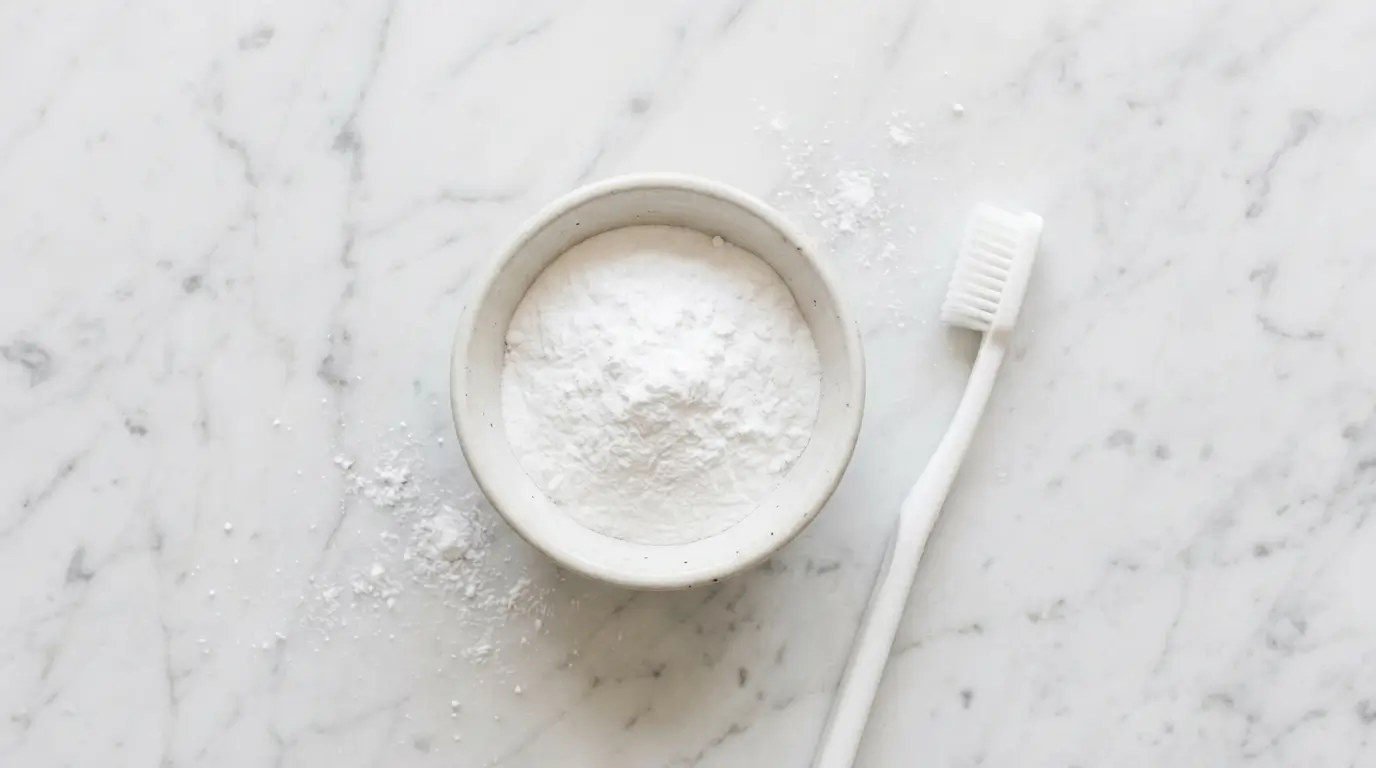
Baking soda has been used as a dental cleaning agent for more than a century — long before whitening strips existed. It shows up in dozens of commercial toothpastes today because the science supporting it is genuinely solid. But there is a right way to use it and a wrong way, and the difference matters for your enamel.
This guide walks you through what the research actually says, how to use baking soda for teeth whitening at home, what it cannot do, and how to avoid the mistakes that cause real dental damage.
Table content
Does Baking Soda Actually Whiten Teeth?
The short answer is yes — within limits. Baking soda (sodium bicarbonate) whitens teeth through a combination of mild abrasion and chemistry. Here is how both mechanisms work.
Mechanical abrasion. Tooth discoloration falls into two categories: extrinsic stains (surface stains from coffee, tea, red wine, and tobacco) and intrinsic stains (discoloration within the tooth structure itself). Baking soda’s gentle abrasiveness — its Relative Dentin Abrasivity (RDA) value sits around 7, compared to 200+ for some whitening powders — is effective at scrubbing away extrinsic stains without abrading enamel in normal use. The American Dental Association (ADA) considers abrasives with an RDA below 250 safe for daily use; baking soda falls well within that range.
Alkaline chemistry. Baking soda raises the pH in your mouth, creating an environment that is hostile to the acid-producing bacteria responsible for plaque and early enamel erosion. A 2017 meta-analysis published in the Journal of the American Dental Association reviewed 12 randomized controlled trials and found that sodium bicarbonate toothpaste was significantly more effective at removing plaque than non-bicarbonate toothpastes. Less plaque means the surface discoloration that plaque traps has fewer places to accumulate.
What it cannot do. Baking soda will not change the underlying color of your enamel. If your teeth are naturally more yellow than white — because of genetics, aging, or intrinsic staining from tetracycline antibiotics — baking soda will not fix that. For deep intrinsic whitening, professional bleaching agents (hydrogen peroxide or carbamide peroxide) are the clinically validated option. Baking soda is a surface-stain remover, not a bleach.
How to Use Baking Soda to Whiten Teeth: 3 Methods
Method 1: Pure Baking Soda Paste (Simplest)
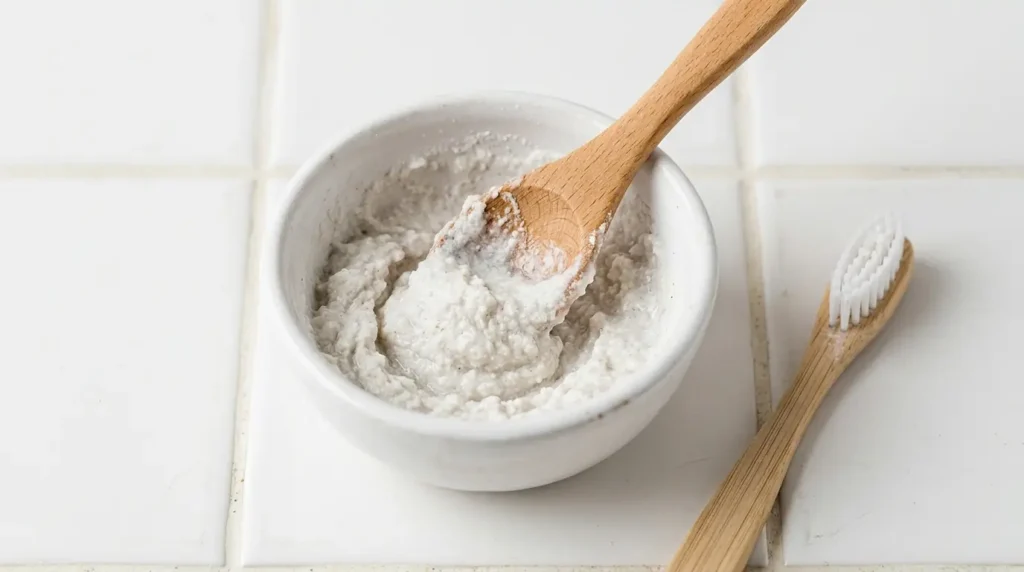
This is the most direct approach and requires nothing beyond what you already have in the kitchen.
What you need:
- 1 teaspoon baking soda
- Enough water to form a paste (roughly ½ teaspoon)
- A soft-bristled toothbrush
Steps:
- Mix the baking soda and water in a small bowl or in the palm of your hand until you have a thin, even paste. It should not be gritty or dry.
- Apply the paste to your toothbrush.
- Brush gently for 2 minutes using small, circular motions. Do not scrub hard — pressure does not improve abrasion, it just damages gum tissue.
- Rinse thoroughly with water. Spit, do not swallow.
- Follow with a fluoride toothpaste if you are not already using a baking soda toothpaste with fluoride.
Frequency: No more than 2–3 times per week. Daily use is unnecessary and, over the long term, may contribute to enamel wear.
Method 2: Baking Soda and Hydrogen Peroxide Paste
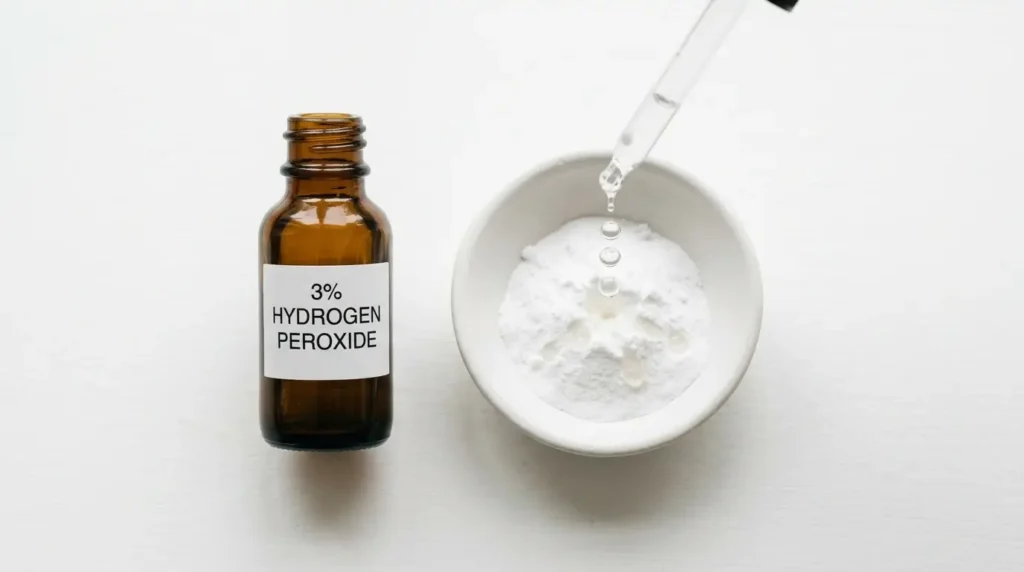
Several commercial whitening toothpastes combine baking soda with low-concentration hydrogen peroxide, and for good reason — the combination targets both surface stains (via abrasion) and light intrinsic staining (via peroxide’s oxidizing action). A 6-week clinical trial published in the Journal of Clinical Dentistry found this combination measurably more effective at whitening than toothpastes containing either ingredient alone.
What you need:
- 1 teaspoon baking soda
- A few drops of 3% hydrogen peroxide (the standard drugstore concentration — do not use higher)
Steps:
- Mix to a smooth paste. The mixture will fizz slightly; that is the oxidation reaction at work.
- Apply to your toothbrush and brush gently for 2 minutes.
- Rinse completely. Do not swallow.
Frequency: Once or twice per week, maximum. Hydrogen peroxide in higher concentrations or used too frequently can irritate gum tissue and temporarily increase tooth sensitivity. If you notice either, stop immediately and consult your dentist.
For a full exploration of what happens when these two ingredients are combined — including safe concentration guidelines and uses beyond dental care — see our guide to baking soda and hydrogen peroxide safe uses and recipes.
Method 3: Baking Soda Toothpaste (Most Practical for Daily Use)
If you want the benefits of baking soda without formulating your own paste each time, a commercial toothpaste containing sodium bicarbonate is the most convenient and safest route. These products are professionally formulated with the right abrasivity, include fluoride (critical for enamel remineralization), and often include buffering agents to prevent pH swings.
Look for the ADA Seal of Acceptance on the packaging. Products carrying that seal have been independently tested for safety and efficacy. Our in-depth recipe for a homemade baking soda toothpaste covers a tested formulation you can make at home, including the ingredient ratios that keep the RDA value in the safe zone.
How Long Does It Take to See Results?
Results depend on what type of staining you are dealing with.
| Stain type | Realistic timeline with baking soda |
|---|---|
| Light coffee/tea surface stains | 2–4 weeks of consistent use |
| Heavy coffee/wine staining | 4–8 weeks; results may plateau |
| Tobacco staining | Noticeable improvement, but likely incomplete without professional cleaning |
| Intrinsic/age-related yellowing | Minimal to no effect |
Managing expectations matters here. Baking soda is not a fast-acting whitening system. It works gradually, in the same way that regular brushing gradually cleans. Anyone promising dramatic results in 24 hours is either selling you a peroxide product (which does chemically bleach) or overstating what abrasion can accomplish.
Safety: What You Need to Know Before You Start
Enamel and sensitivity
Because baking soda is abrasive, the most common concern is enamel erosion. The research is reassuring on this point — at the RDA values found in sodium bicarbonate pastes, long-term studies have not demonstrated clinically significant enamel loss. The key qualifier is normal use. Using baking soda twice a day, brushing hard, and leaving it on for extended periods changes that calculation.
If you already have sensitive teeth, thinned enamel, or exposed dentin, speak with your dentist before using any abrasive whitening method, including baking soda.
Crowns, veneers, and bonding
Baking soda will not lighten porcelain crowns, composite bonding, or veneers. It may scratch some composite resin surfaces with heavy use. If you have significant dental work, ask your dentist specifically whether abrasive pastes are appropriate for your situation.
Children
Do not use baking soda for teeth whitening on children under 12. Developing enamel is more susceptible to abrasion, and the cosmetic concern simply does not outweigh the risk at that age.
Fluoride
Baking soda does not contain fluoride. Fluoride is essential for remineralizing enamel and preventing decay. If you use pure baking soda paste for whitening, either follow it immediately with a fluoride toothpaste or use a baking soda–formulated toothpaste that already contains fluoride. Replacing all your brushing with plain baking soda paste is not a sound dental hygiene plan.
Baking Soda vs. Other At-Home Whitening Methods
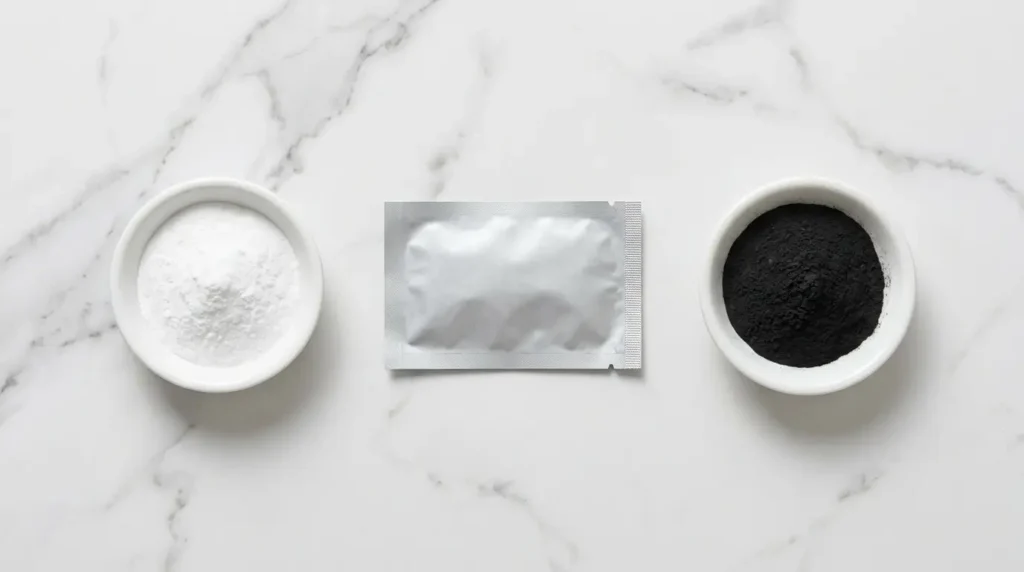
| Method | Mechanism | Effectiveness | Safety notes |
|---|---|---|---|
| Baking soda paste | Mild abrasion + alkaline pH | Extrinsic stains only; gradual | Safe at 2–3×/week; low RDA |
| Whitening strips (10–15% peroxide) | Chemical oxidation | Extrinsic + mild intrinsic | Can cause gum irritation; follow instructions |
| Activated charcoal | Abrasion | Extrinsic only | High RDA in many products; ADA does not endorse |
| Oil pulling | Disputed; may reduce bacteria | Limited evidence for whitening | Safe, but not validated as a whitening treatment |
| Professional bleaching | 15–40% peroxide | Extrinsic + intrinsic; fastest | Dentist-supervised; gold standard |
Baking soda occupies a sensible middle ground: better evidence than charcoal, lower cost and risk than peroxide strips, and far more accessible than professional treatment. For maintaining a bright smile between professional cleanings, it is one of the more well-supported tools available.
Common Questions
Can I mix baking soda with lemon juice for teeth whitening?
No. This is one of the more persistent home-remedy myths. Lemon juice is highly acidic (pH around 2–3), and combining it with baking soda produces a neutralization reaction that does create fizzing — but the resulting solution is mildly acidic and exposes your enamel to acid immediately before scrubbing it. That is the opposite of what you want. The acid softens enamel temporarily, and brushing in that window accelerates erosion. Avoid this combination entirely for oral use.
Does baking soda kill the bacteria that cause bad breath?
Baking soda’s alkaline environment does inhibit acid-producing oral bacteria, and some studies suggest it can reduce volatile sulfur compounds (the primary driver of bad breath) when used as part of a toothpaste formulation. However, it is not a substitute for treating the underlying cause of chronic bad breath, which is often bacterial biofilm on the tongue or between teeth that requires regular flossing and tongue scraping.
How is baking soda different from baking powder for teeth?
Baking powder contains baking soda plus an acid (usually cream of tartar or sodium aluminum sulfate) and a starch filler. The acid component makes baking powder unsuitable for dental use — it lowers oral pH exactly when you want to raise it. Use only pure baking soda (sodium bicarbonate) for any dental application.
The Bottom Line
Baking soda is a genuinely effective, well-researched tool for removing extrinsic tooth stains when used correctly — meaning gently, a few times per week, followed by fluoride toothpaste. The evidence supporting it goes back decades and has been confirmed in multiple controlled trials. Its limitations are just as real: it does not bleach intrinsic discoloration, it cannot replace fluoride, and using it aggressively does carry abrasion risk.
For everyday whitening maintenance, it earns its place. For deep whitening goals, it belongs alongside — not instead of — professional dental care.
To understand how baking soda works chemically and why it behaves differently in different contexts, the complete guide to what baking soda is covers the underlying chemistry in plain English. And if you are building a broader baking soda health and beauty routine, our baking soda for health and beauty hub is the best starting point for the full picture.
Sources:
- Epple M, et al. “A Critical Review of Modern Concepts for Teeth Whitening.” Dentistry Journal, 2019.
- Putt MS, et al. “Enhancement of plaque removal efficacy by tooth brushing with baking soda dentifrices.” Journal of Clinical Dentistry, 2008.
- Gonzalez-Cabezas C, Hara AT. “Sodium Bicarbonate Dentifrices and Tooth Whitening.” Journal of the American Dental Association, 2017.
- American Dental Association (ADA). “Whitening: 5 Things to Know About Getting a Brighter Smile.” MouthHealthy.org.
- NIH National Institute of Dental and Craniofacial Research. “Oral Health.”