Medical Disclaimer: This article is for general informational purposes and is not medical or dental advice. Consult your dentist before making changes to your oral hygiene routine, especially if you have crowns, veneers, sensitive enamel, or active cavities.
Baking soda has been used as a tooth-cleaning agent for well over a century — long before commercial toothpaste existed. Today, with growing interest in simple, low-ingredient home care, searches for a reliable baking soda toothpaste recipe have surged. This guide covers everything you need to make it correctly: the science, three tested recipes, safe usage guidelines, and the honest limitations you need to understand before ditching your fluoride toothpaste.
Table content
- 1 What Baking Soda Actually Does in Your Mouth
- 2 The Core Limitation You Should Not Skip
- 3 Three Baking Soda Toothpaste Recipes (Tested)
- 4 How to Brush With Baking Soda Toothpaste Correctly
- 5 Who Should Be Cautious
- 6 Does Baking Soda Damage Enamel?
- 7 What Baking Soda Toothpaste Cannot Do
- 8 Frequently Asked Questions
- 9 The Bottom Line
What Baking Soda Actually Does in Your Mouth
Baking soda is sodium bicarbonate (NaHCO₃), a naturally alkaline compound with a pH of approximately 8.3. Inside your mouth, that alkalinity does two useful things.
It neutralizes acids. The bacteria in dental plaque produce lactic acid after feeding on sugars. That acid is what demineralizes enamel and starts the cavity process. Baking soda’s alkaline chemistry directly counters this, raising oral pH toward neutral and giving enamel a better environment to remineralize.
It lifts surface stains through mild abrasion. Baking soda has a Relative Dentin Abrasivity (RDA) score of around 7 — one of the lowest of any cleaning agent. For comparison, most commercial whitening toothpastes sit between 100 and 150 RDA. That low score means baking soda polishes away surface chromogens (coffee, tea, wine) with very little friction risk to the enamel beneath.
The clinical evidence supports this. A 2008 meta-analysis published in the Journal of Clinical Dentistry found that toothpastes containing baking soda were significantly more effective at plaque removal compared to non-baking-soda formulas. A follow-up review in the same journal in 2017 confirmed baking soda’s gingival benefits, noting reduced bleeding scores in patients who used baking soda-based pastes. The American Dental Association (ADA) has granted its Seal of Acceptance to commercial toothpastes that include sodium bicarbonate as an active ingredient, which signals a meaningful safety and efficacy threshold.
The Core Limitation You Should Not Skip
Before the recipes: baking soda does not contain fluoride.
Fluoride is the ingredient responsible for remineralizing early-stage enamel lesions and actively protecting against cavities. No naturally derived substitute has matched its cavity-prevention record in clinical trials. If you use a homemade baking soda toothpaste as your sole brushing agent, you eliminate fluoride from your oral care routine — a real trade-off, particularly for children, people with dry mouth, or anyone with a history of cavities.
The practical solution most dentists suggest: use homemade baking soda toothpaste as an occasional supplement — perhaps once a day or a few times per week — while continuing to brush with a fluoride toothpaste at least once daily. That approach lets you capture the stain-lifting and pH-neutralizing benefits without abandoning cavity protection.
Three Baking Soda Toothpaste Recipes (Tested)
All three recipes use food-grade or USP-grade baking soda. Store-bought baking soda sold for cooking (such as Arm & Hammer) is USP grade and appropriate for oral use.
Recipe 1 — Basic Baking Soda Paste (2 Ingredients)
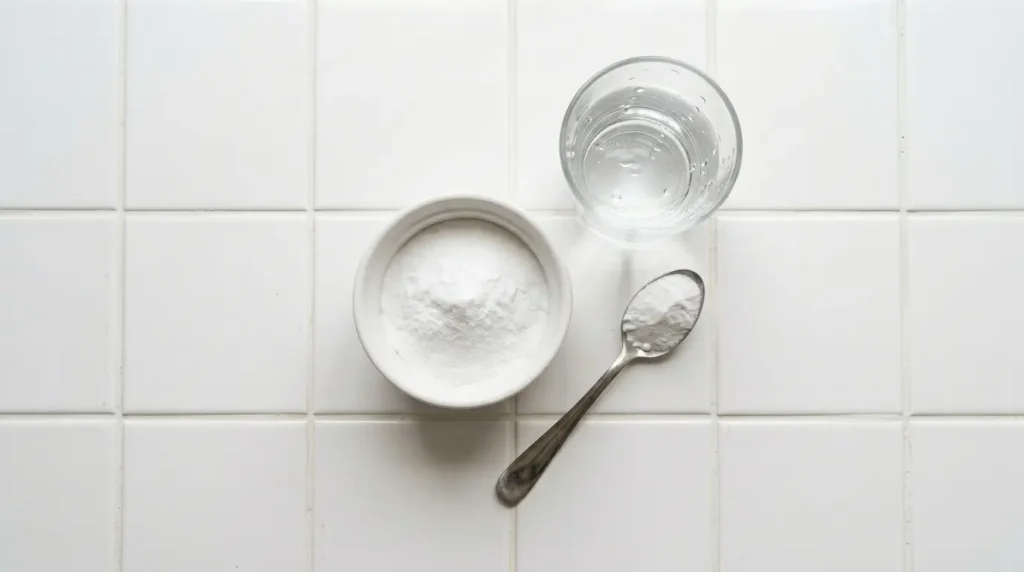
This is the simplest version. It has no binding agent, so it separates quickly — make a fresh small batch each use or stir before using.
Ingredients:
- 2 teaspoons baking soda
- 1–2 teaspoons distilled water (enough to form a paste)
Method:
- Add the baking soda to a small, clean dish.
- Add distilled water one teaspoon at a time, stirring until you reach a smooth paste consistency — thicker than milk, thinner than commercial toothpaste.
- Apply a pea-sized amount to your toothbrush.
- Brush for two minutes using gentle, circular motions. Rinse thoroughly.
Storage: Do not store. Mix per use. Water introduces bacteria; a fresh batch every time is safest.
Best for: People who want the most minimal version — no additives, no flavor, full control.
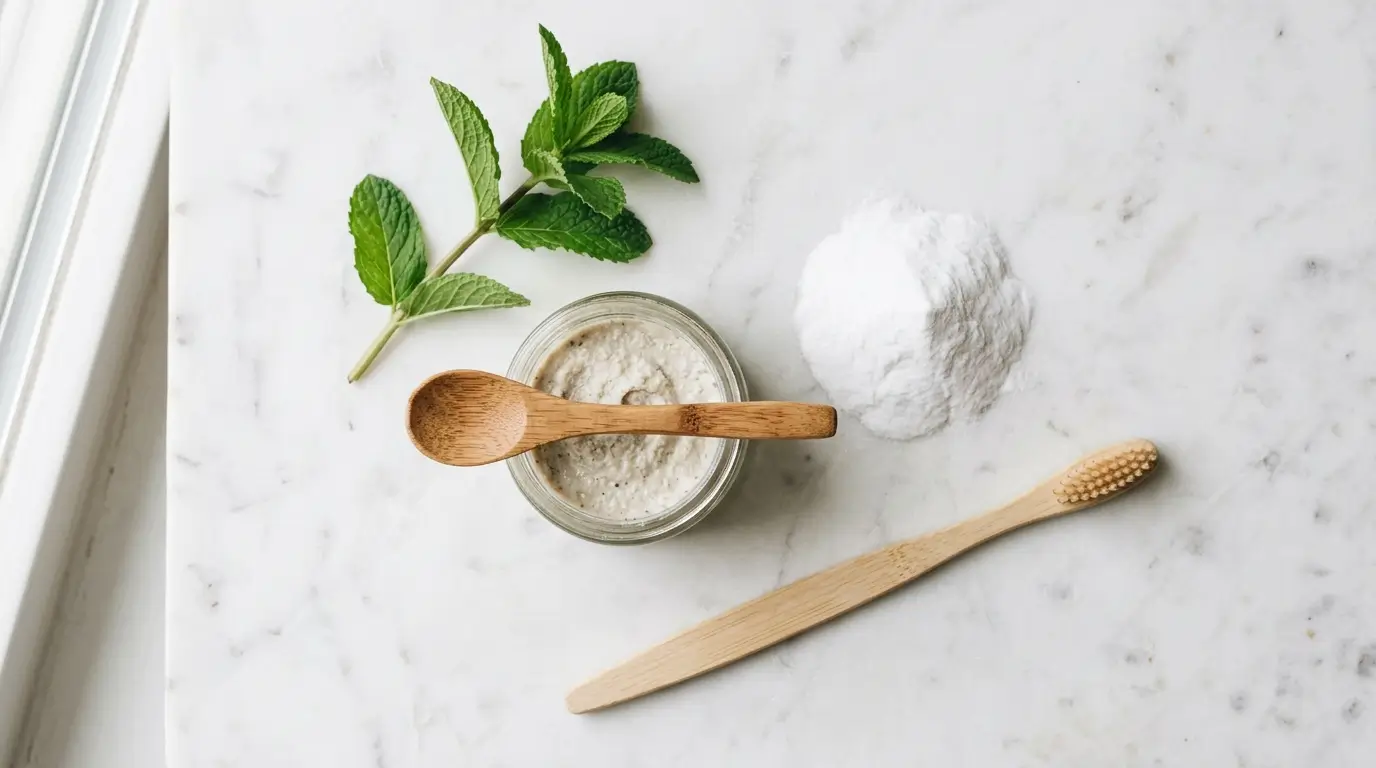
Recipe 2 — Coconut Oil and Peppermint Paste (Most Popular)
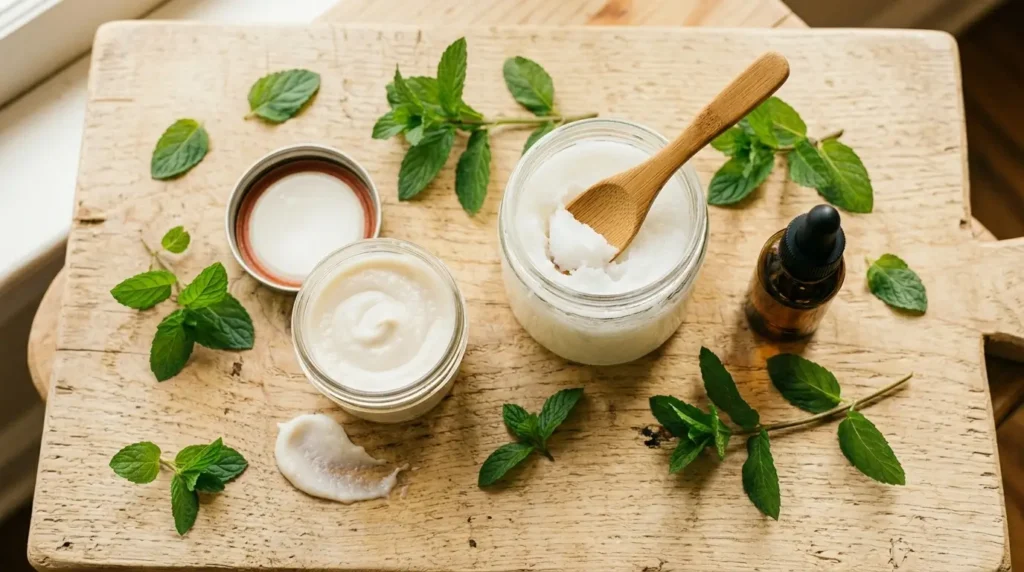
Coconut oil acts as the binding agent here, giving the paste a spreadable, commercial-toothpaste-like consistency. Peppermint essential oil delivers the fresh-mouth feeling that makes brushing feel complete. This version stores well for up to two weeks in a small jar.
Ingredients:
- 4 tablespoons baking soda
- 3 tablespoons virgin coconut oil (softened or melted)
- 10–15 drops food-grade peppermint essential oil
- Optional: 1 teaspoon xylitol (adds mild sweetness; xylitol also has evidence-backed cavity-fighting properties)
Method:
- If your coconut oil is solid, gently warm it until just softened — not liquid.
- Combine the baking soda and coconut oil in a small bowl. Stir until uniform and no dry baking soda clumps remain.
- Add the peppermint oil and xylitol (if using). Stir again.
- Transfer to a small glass jar with a lid.
- To use: scoop a pea-sized amount with a clean spoon or toothpick (do not dip your brush directly into the jar — it introduces bacteria). Apply to brush and brush for two minutes. Rinse well.
Storage: Up to two weeks at room temperature; up to four weeks refrigerated. The paste will firm up in the fridge — let it sit at room temperature for five minutes before using.
Best for: Everyday supplemental use. The coconut oil gives a more familiar texture and the peppermint flavor makes it easy to stay consistent.
A note on coconut oil: Some websites claim coconut oil “pulling” with baking soda removes bacteria via lipid binding. The evidence for oil pulling as a standalone dental treatment is weak and inconsistent. In this recipe, coconut oil functions primarily as a binder and carrier — not as a therapeutic agent. Don’t apply expectations to it that the evidence doesn’t support.
Recipe 3 — Whitening Paste With Hydrogen Peroxide
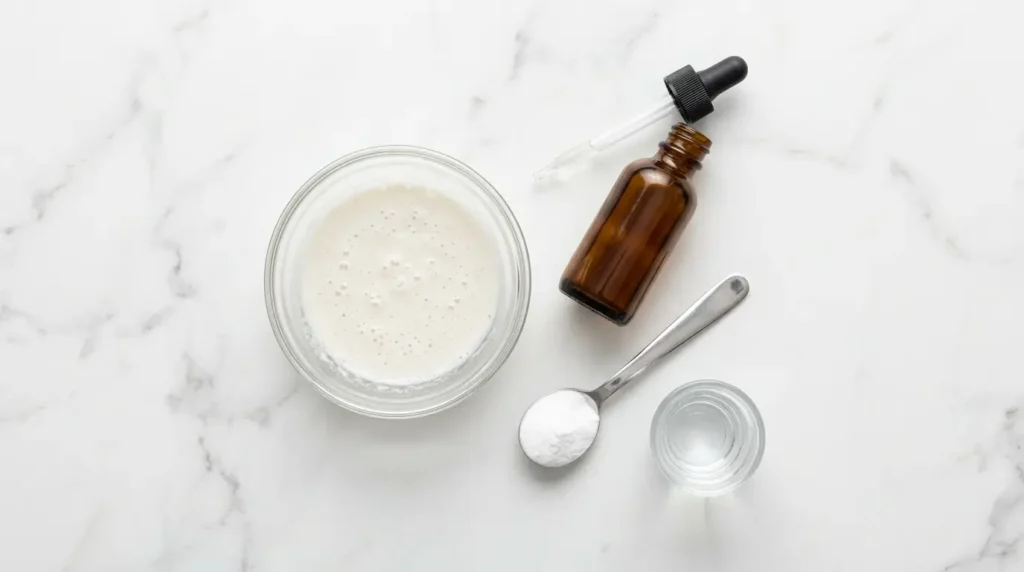
This version adds a low-concentration hydrogen peroxide for enhanced surface stain removal. Hydrogen peroxide is an active ingredient in many ADA-approved whitening products; at 1–1.5% concentration (the dilution here), it is considered safe for short-term use.
Ingredients:
- 4 tablespoons baking soda
- 2 tablespoons 3% hydrogen peroxide (standard drugstore concentration)
- 1 tablespoon distilled water
- 10 drops spearmint or peppermint essential oil
Method:
- Combine baking soda and hydrogen peroxide in a small bowl. The mixture will fizz briefly — this is a normal reaction.
- Add the distilled water and essential oil. Stir until the fizzing subsides and the paste is smooth.
- Apply a pea-sized amount to your toothbrush. Brush for two minutes. Rinse very thoroughly.
Storage: This recipe is less stable than the coconut oil version. Make small batches and use within one week, stored in a sealed container. Refrigerate if your kitchen is warm.
Frequency: Use this version no more than two to three times per week. Hydrogen peroxide, even diluted, can cause gum sensitivity and temporary tooth sensitivity with daily use. If you notice either, reduce frequency or discontinue.
Do not use this recipe if: You have crowns, veneers, or bonded restorations — hydrogen peroxide can affect bonding agents and some ceramic glazes over time.
If whitening is your primary goal, you may also want to read our guide on how to whiten teeth with baking soda safely for a broader look at what the evidence supports.
How to Brush With Baking Soda Toothpaste Correctly
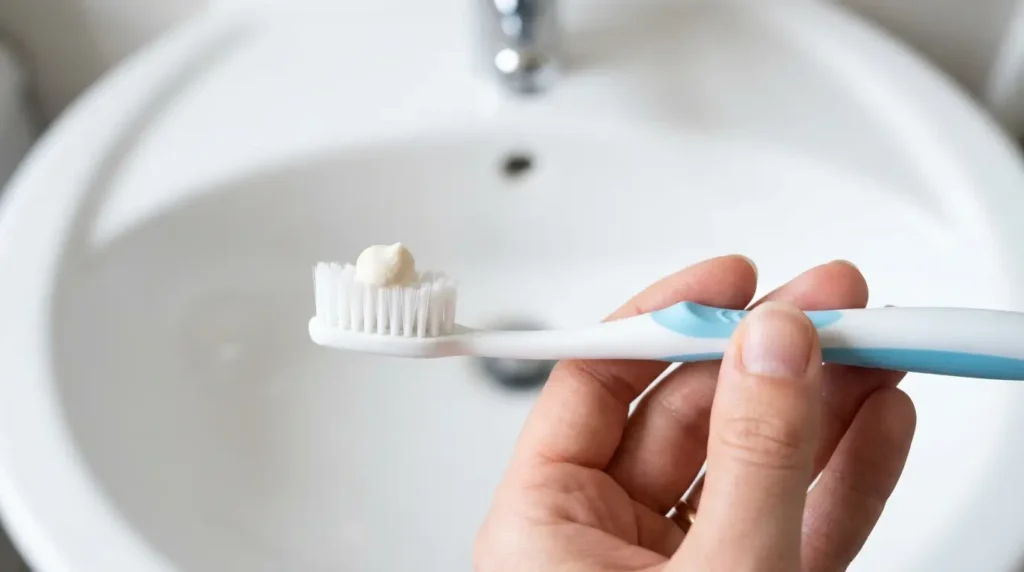
The mechanics matter more with baking soda paste than with commercial toothpaste, because you’re removing the foam and friction cues that most people rely on.
- Use a soft-bristle brush. Baking soda’s abrasivity is low, but combining it with a medium or hard brush increases friction. Soft bristles are the standard recommendation from the ADA regardless of toothpaste type.
- Use gentle pressure. Let the paste do the work. Scrubbing hard adds abrasion without adding cleaning benefit.
- Brush for the full two minutes. Without the foaming agents in commercial toothpaste, there’s less sensory feedback. Set a timer.
- Rinse thoroughly. Baking soda paste leaves a chalky residue if not fully rinsed. Rinse for 30–45 seconds.
- Don’t swallow. This applies particularly to the hydrogen peroxide version. Swallowing small amounts of plain baking soda is harmless for most adults, but the peroxide version should not be ingested.
Who Should Be Cautious
Baking soda toothpaste is appropriate for most healthy adults, but exercise extra caution in these situations:
Sensitive enamel or exposed dentin. While baking soda’s RDA is low, any abrasive can irritate already-thinned enamel. If your teeth are sensitive to hot and cold, check with your dentist before switching.
Crowns, veneers, or composite bonding. Baking soda — and especially the peroxide version — can dull the surface of porcelain restorations over time. For these patients, commercial toothpaste formulated for restorations is a safer choice.
Children under 12. Children’s enamel is less mineralized than adult enamel. The primary cavity-prevention priority for children is fluoride. Homemade baking soda toothpaste should not replace fluoride toothpaste for kids.
People on sodium-restricted diets. Baking soda is a sodium salt. Although the amount absorbed through brushing is minimal, people with strict sodium restrictions (such as those with hypertension or kidney conditions) should discuss this with their physician.
Orthodontic appliances. Metal brackets and archwires can corrode with prolonged exposure to baking soda. If you’re in orthodontic treatment, stick to the toothpaste your orthodontist recommends.
Does Baking Soda Damage Enamel?
This is the most common concern, and the short answer is: no, not at normal use frequency.
The fear comes from the word “abrasive,” but abrasivity exists on a spectrum. The RDA scale runs from near zero to 250; the ADA considers anything under 250 safe for daily use. At an RDA of 7, baking soda is one of the safest abrasives available — roughly on par with “sensitive” formula commercial toothpastes, which typically score between 30 and 60.
The caveat is frequency and technique. Using baking soda toothpaste twice daily, every day, while brushing vigorously with a hard-bristle brush is a different proposition than using it gently a few times per week. At recommended frequency and with a soft brush, enamel damage is not a supported concern in the published literature.
What Baking Soda Toothpaste Cannot Do
Be clear-eyed about the boundaries:
- It will not reverse cavities. Only remineralization (driven by fluoride and saliva minerals) can address early-stage demineralization; baking soda has no remineralizing mechanism.
- It will not kill the bacteria responsible for gum disease. Antibacterial agents — such as triclosan, stannous fluoride, or chlorhexidine — are required for that. Baking soda’s alkalinity may slow bacterial acid production, but it does not eliminate pathogenic bacteria populations.
- It will not whiten teeth beyond surface stain removal. Deep, intrinsic discoloration (from tetracycline, trauma, or genetics) is not affected by topical abrasion. For intrinsic whitening, carbamide peroxide or hydrogen peroxide gels at dentist-supervised concentrations are required.
Understanding these limits is not a reason to avoid baking soda toothpaste — it’s a reason to use it strategically, as part of an oral care routine that still includes fluoride and regular professional cleanings.
Frequently Asked Questions
Can I use baking soda toothpaste every day?
The coconut oil version (Recipe 2) is gentle enough for daily use as a supplement to fluoride toothpaste. The hydrogen peroxide version (Recipe 3) should be limited to two to three times per week.
Does baking soda toothpaste actually whiten teeth?
It removes surface stains effectively, which makes teeth appear whiter. Clinical studies confirm this benefit. It does not change the underlying color of enamel. For a deeper look at whitening evidence, see our article on how to whiten teeth with baking soda safely.
Can I add essential oils other than peppermint?
Spearmint, cinnamon, and clove essential oils are commonly used. Clove oil contains eugenol, which has mild analgesic and antimicrobial properties — a reasonable addition for people prone to gum sensitivity. Use food-grade essential oils only, and keep concentrations low (10–15 drops per batch).
Is baking soda toothpaste safe during pregnancy?
Plain baking soda is generally regarded as safe for topical use. The hydrogen peroxide version should be avoided during pregnancy; the research on peroxide exposure in pregnancy is limited and errs on the side of caution. Confirm any oral care changes with your OB-GYN and dentist.
Why does my mouth feel chalky after using it?
Baking soda doesn’t dissolve completely, and without foaming agents, the residue stays on teeth until rinsed. Rinse more thoroughly — 30 to 45 seconds of active rinsing — and the chalkiness disappears.
The Bottom Line
A homemade baking soda toothpaste recipe is a genuinely useful addition to an oral care routine — not a replacement for it. The science behind its stain-lifting, acid-neutralizing, and plaque-loosening properties is solid. The three recipes above give you options based on your goals: the two-ingredient paste for minimalists, the coconut oil version for everyday convenience, and the peroxide version for occasional whitening sessions.
Use a soft brush, keep the frequency sensible, and maintain a fluoride toothpaste in your routine. That combination gives you the benefits of both without sacrificing the one thing baking soda cannot replace.
For more on how baking soda performs in other health and beauty applications, visit our complete guide to baking soda for health and beauty.