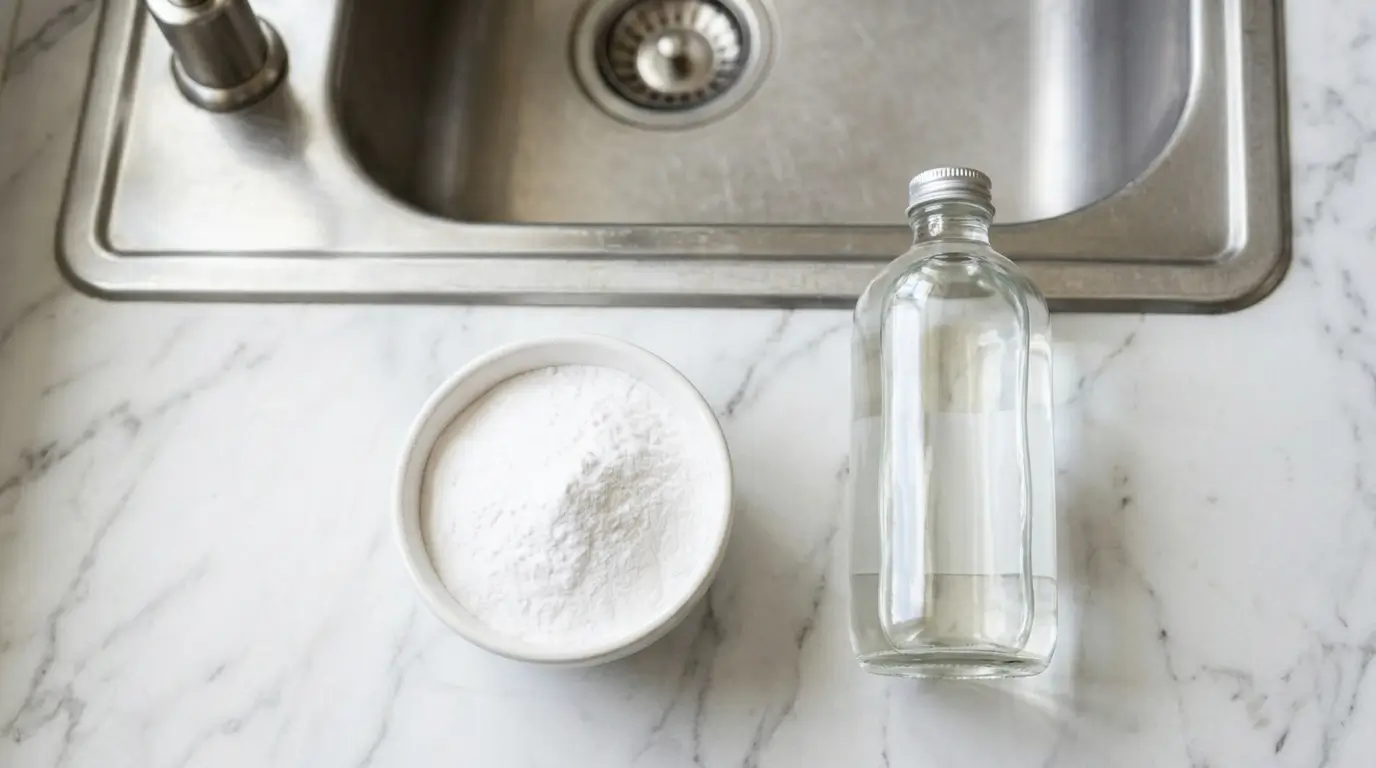
A slow drain is one of the most annoying household problems — and one of the most fixable. Before you reach for a bottle of chemical drain cleaner, there is a two-ingredient method already sitting in your kitchen that can clear most minor clogs and keep drains flowing freely with regular use.
This guide covers exactly how to use baking soda and vinegar on a drain, why the reaction works (and what it cannot do), when you genuinely need a plumber, and how to build a simple maintenance routine that prevents most slow-drain problems from developing in the first place.
Table content
Why Baking Soda and Vinegar React the Way They Do
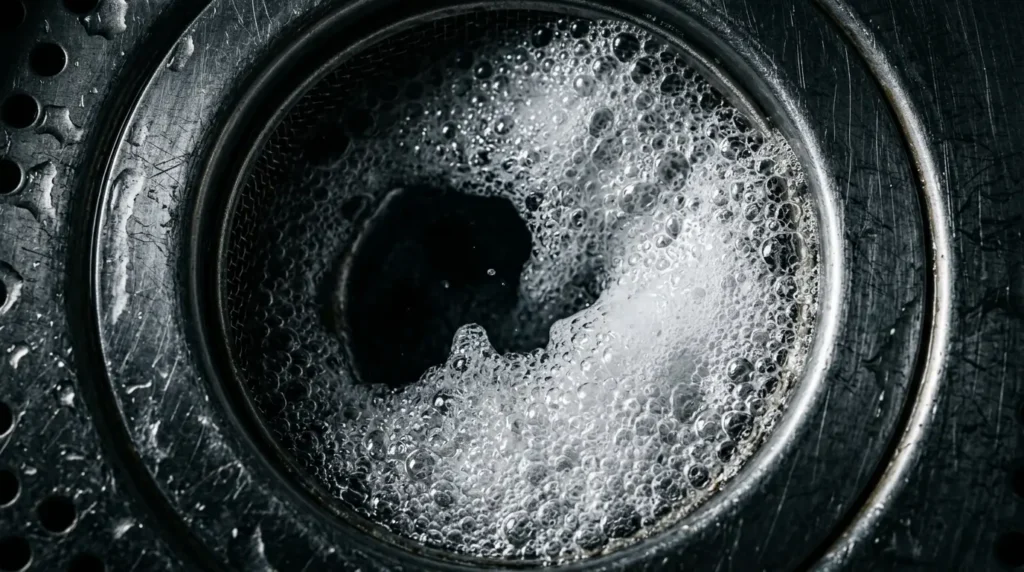
When baking soda (sodium bicarbonate, a base) meets vinegar (acetic acid), they undergo an acid-base neutralization reaction. The visible fizzing you see is carbon dioxide gas being released rapidly. That fizzing action creates mild mechanical agitation inside the drain pipe — enough to dislodge loose debris, soap scum buildup, and light grease deposits clinging to pipe walls.
The reaction itself is:
NaHCO₃ + CH₃COOH → CH₃COONa + H₂O + CO₂
What remains after the reaction is sodium acetate, water, and dissolved CO₂. Sodium acetate is a mild salt with some degreasing properties — it is not a corrosive chemical. This is precisely why this method is safe for all pipe materials, including PVC, copper, and older cast iron pipes that can be damaged by repeated exposure to strong chemical drain cleaners.
What this method does well:
- Breaks up soap scum and light grease accumulation
- Neutralizes odor-causing bacteria in the drain trap
- Keeps drains flowing between deeper cleanings
- Completely safe for pipes, septic systems, and the environment
What it cannot do:
- Dissolve a solid clog (hair clumps, food scraps, foreign objects)
- Replace a drain snake for serious obstructions
- Fix a clog caused by structural pipe problems
What You Need
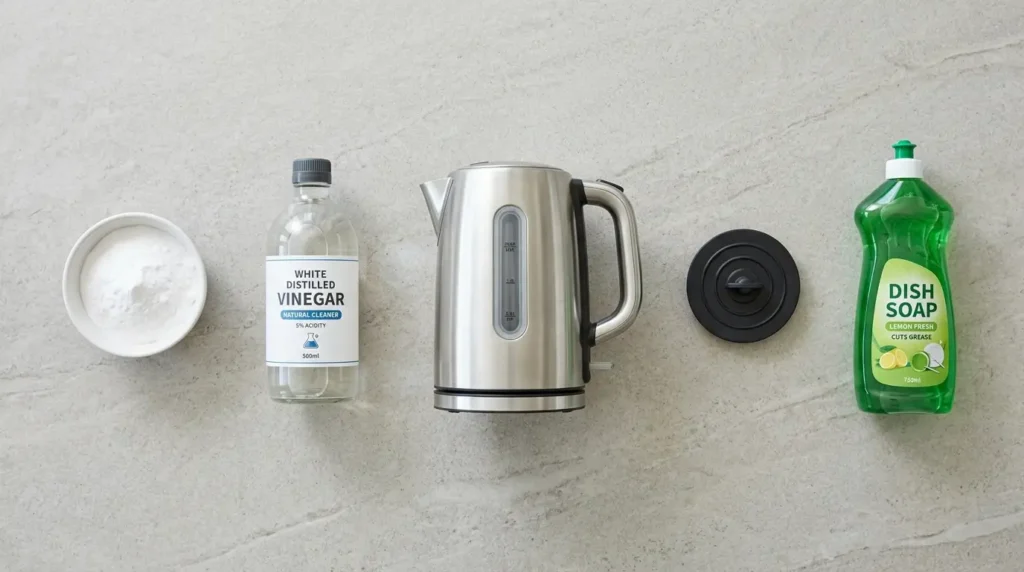
- ½ cup baking soda
- 1 cup white distilled vinegar (5% acidity — standard grocery-store white vinegar)
- 1 kettle of boiling water (approximately 4–6 cups)
- A drain stopper or a folded cloth to temporarily seal the drain opening
- Optional: 1 tablespoon dish soap
You do not need apple cider vinegar, cleaning vinegar, or any special baking soda product. Plain, inexpensive white vinegar and standard baking soda work best for this application. For a deeper look at the chemistry of this combination, see our guide to baking soda and vinegar reactions.
Step-by-Step Instructions
Step 1: Boil the Water First
Bring a full kettle of water to a boil before you do anything else. This pre-loosens greasy buildup on the pipe walls, making the baking soda and vinegar reaction more effective. Pour the boiling water slowly and directly down the drain. Let it work for 60 seconds.
Important safety note: Do not use boiling water in toilets or drains connected to porcelain fixtures — thermal shock can crack the porcelain. For those drains, use the hottest tap water available.
Step 2: Add the Baking Soda
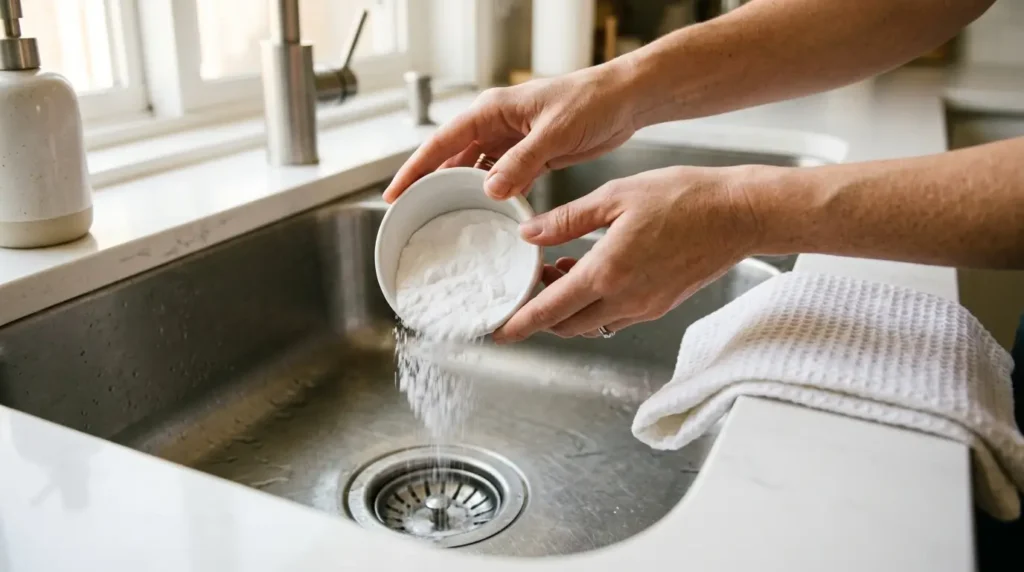
Pour ½ cup of baking soda down the drain. Use a spoon or a funnel if you have a narrow drain opening — you want the baking soda to land inside the pipe, not sit on the drain cover. Allow it to sit for 5 minutes. During this time, the baking soda begins deodorizing and coating residue on the pipe walls.
Step 3: Add the Vinegar and Seal the Drain
Pour 1 cup of white vinegar directly down the drain on top of the baking soda. Immediately cover the drain opening with a stopper or press a folded cloth firmly over it. This is the step most people skip — and it matters. Sealing the drain forces the CO₂ pressure downward into the pipe rather than allowing it to escape upward into the room. That directed pressure is what gives the reaction its cleaning effect.
You will feel the cloth or stopper pulsing slightly as gas builds. That is normal and means the reaction is working properly.
Step 4: Wait 20–30 Minutes
Leave the drain sealed for a minimum of 20 minutes. For drains that have been slow for a while, 30 minutes is better. Do not run any water in that sink or tub during this time.
Step 5: Flush With More Hot Water
Remove the cover and flush the drain with another kettle of boiling water (or the hottest tap water for porcelain fixtures). Run the hot water for 30–60 seconds continuously to clear all residue from the pipe.
Optional: Add Dish Soap for Greasy Kitchen Drains
For kitchen sink drains where grease buildup is the primary problem, add 1 tablespoon of dish soap after the baking soda and before the vinegar. Dish soap is a surfactant — it helps break the bond between grease and the pipe wall, and the vinegar reaction then flushes it through. This combination is particularly effective for drains near a stove or dishwasher.
How Often to Use This Method
Maintenance (preventing slowdowns): Once a month. Run the full procedure on every drain in the house — kitchen sink, bathroom sink, bathtub, and shower. This 20-minute routine prevents the slow creep of soap scum and grease that turns a functional drain into a sluggish one over several months.
For an already-slow drain: Use the method twice in the same day — once in the morning, once in the evening. If the drain is still slow after two treatments, move on to a drain snake before attempting a third round of baking soda and vinegar. Repeated chemical agitation without mechanical intervention will not clear a genuine hair or debris clog.
Drain-Specific Tips
Bathroom Sink Drains
The most common culprit here is toothpaste residue and soap scum mixing with hair near the stopper. Before applying baking soda and vinegar, remove the pop-up stopper (most unscrew or pull straight up) and clean it manually under running water. Then proceed with the full method. The combination of a clean stopper and a treated drain solves the majority of bathroom sink drainage problems.
Shower and Bathtub Drains
Hair is the primary offender. Baking soda and vinegar will not dissolve a hair clog — no household remedy does. Use a drain hair catcher tool or a drain snake to remove the physical obstruction first, then follow with the baking soda and vinegar treatment to address residual soap scum and deodorize.
Kitchen Sink Drains
Grease, coffee grounds, and food particles accumulate even when you use a strainer correctly. Monthly maintenance treatments are especially valuable for kitchen drains. If you have a garbage disposal, run it fully before applying the treatment, and run it again during the final hot-water flush.
Bathroom Floor Drains (Utility Rooms, Basements)
These drains often have dry traps because they are rarely used. Before treating with baking soda and vinegar, pour a cup of water down the drain to reseal the trap. A dry trap is often the source of the odor you are attributing to a dirty drain.
When Baking Soda and Vinegar Are Not Enough
This method works best on organic buildup: soap, grease, biofilm, and soft debris. It has clear limitations.
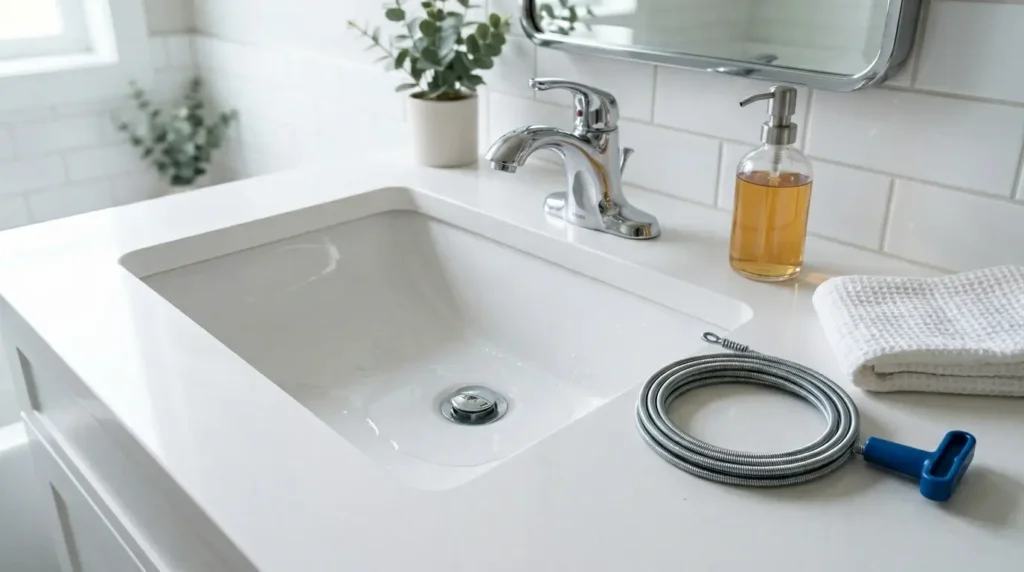
Use a drain snake instead when:
- Water is standing completely still in the basin — a sign of a full blockage, not just buildup
- You can see a clump of hair at or near the drain opening
- The slow drain is in a toilet (never use baking soda and vinegar here — use a plunger, then a toilet auger)
- Multiple drains in the house are slow simultaneously (this indicates a main-line issue, not individual drain buildup)
Call a plumber when:
- Multiple drains back up at the same time
- Drains gurgle when you flush the toilet
- Water backs up into other fixtures
- You have tried a drain snake and the clog returned within a week
These symptoms point to a main sewer line problem, a venting issue, or a root intrusion — none of which a household cleaning method can address.
Why Not Just Use Chemical Drain Cleaners?
Chemical drain cleaners (products using sodium hydroxide or sulfuric acid) are effective at dissolving organic matter quickly, but they come with trade-offs that make baking soda and vinegar a better default choice for routine maintenance.
Chemical cleaners generate significant heat during the reaction — enough to warp PVC pipes over repeated use and to crack older pipes with existing weaknesses. They are also toxic to handle, dangerous to mix accidentally with other cleaners, harmful to septic systems, and environmentally damaging once they reach the water supply. The CDC and EPA both recommend minimizing use of caustic drain chemicals in favor of mechanical and gentler chemical methods for routine drain maintenance.
For routine upkeep, the baking soda and vinegar method is simply the smarter choice. Save chemical cleaners — if you use them at all — for situations where a drain snake has already removed the physical obstruction and residual chemical buildup is slowing flow.
Related Cleaning Guides on This Site
Baking soda is one of the most versatile cleaning agents in the home. For other household uses, see our guides on baking soda paste for cleaning stains and surfaces and how to clean your oven with baking soda. If you want a broader overview of every baking soda cleaning application — from drains to carpet to laundry — our complete baking soda home cleaning guide covers all of it in one place.
Quick-Reference Summary
| Step | What to Do | Time |
|---|---|---|
| 1 | Pour boiling water down drain | 1 min |
| 2 | Add ½ cup baking soda, wait | 5 min |
| 3 | Add 1 cup white vinegar, seal drain | — |
| 4 | Wait with drain sealed | 20–30 min |
| 5 | Flush with more boiling water | 1 min |
| Total | ~30 min |
Use monthly for maintenance. Repeat twice in one day for an already-slow drain. Switch to a drain snake if two treatments do not improve flow.
This article covers general household drain maintenance. It is not a substitute for a licensed plumber’s assessment when serious drainage problems are present. If you suspect a main sewer line issue, contact a plumber.