Medical Disclaimer: This article is for general informational purposes only and is not medical advice. Consult a physician, dermatologist, or other qualified healthcare provider before using baking soda baths to treat any skin condition, infection, or symptom — particularly if you are pregnant, have kidney disease, high blood pressure, or open wounds.
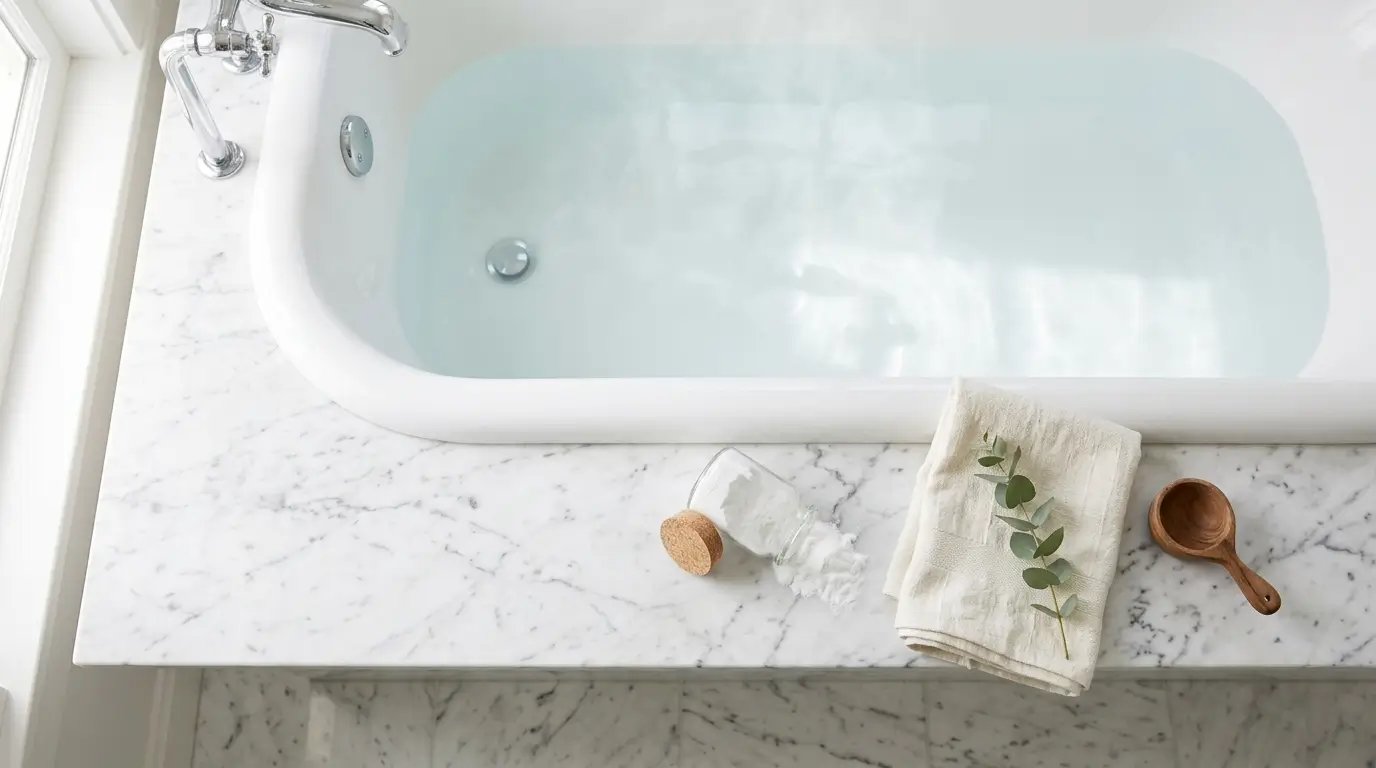
A baking soda bath is one of the simplest, most affordable wellness recipes in the pantry. You dissolve sodium bicarbonate in warm water, soak for 15 to 40 minutes, and let the alkaline solution do its work on irritated, itchy, or inflamed skin. That’s the whole recipe. The appeal is real: research supports baking soda’s ability to soothe certain skin conditions, and the ingredient costs less than a dollar per bath.
But “simple” doesn’t mean “use however you like.” Too much baking soda, water that’s too hot, or bathing too frequently can strip the skin’s acid mantle and leave it more irritated than before. This guide gives you the exact recipe, explains what the science actually says about the benefits, and tells you who should skip this remedy entirely.
Table content
- 1 What Is a Baking Soda Bath?
- 2 Baking Soda Bath Benefits: What the Evidence Says
- 3 The Baking Soda Bath Recipe
- 4 How Much Baking Soda to Use
- 5 How Often Should You Take a Baking Soda Bath?
- 6 Optional Add-Ins (and What to Skip)
- 7 Who Should Avoid Baking Soda Baths
- 8 Baking Soda Bath vs. Other Baking Soda Wellness Uses
- 9 Frequently Asked Questions
- 10 The Bottom Line
What Is a Baking Soda Bath?
Baking soda — chemically sodium bicarbonate (NaHCO₃) — is a mild alkali with a pH of around 8.3. Your skin’s natural surface pH sits between 4.5 and 5.5, which is slightly acidic. When you dissolve baking soda in bathwater, you raise the water’s pH toward neutral or slightly alkaline, and that shift is what produces most of the therapeutic effects.
If you want a deeper look at what baking soda is, how it differs from baking powder, and why its chemistry matters in the kitchen as well as the bathroom, start with our complete guide to what baking soda is.
The practice is old. Sodium bicarbonate soaks appear in dermatology literature going back decades, and the American Academy of Dermatology (AAD) currently includes baking soda baths among its at-home care recommendations for eczema flares and chickenpox discomfort. That institutional endorsement — from a mainstream, peer-reviewed body — is what separates this remedy from wellness folklore.
Baking Soda Bath Benefits: What the Evidence Says
1. Relieves Itching (Pruritus)
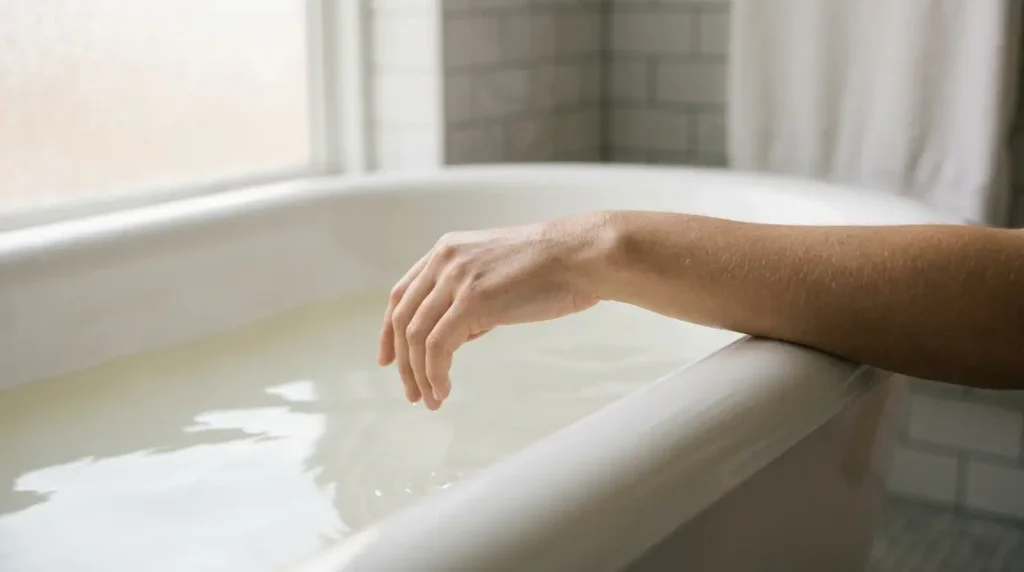
The most well-documented benefit is itch relief. A 2012 study published in the Journal of Dermatological Treatment found that sodium bicarbonate baths reduced pruritus associated with end-stage renal disease more effectively than standard warm-water baths. For eczema, the AAD specifically recommends a baking soda soak as part of a “soak and smear” protocol: bathe in lukewarm water for 15 to 20 minutes, then immediately apply a moisturizer or prescribed topical to seal in hydration.
The mechanism is partly pH-based. Itching associated with certain dermatologic conditions is worsened by local acidity and inflammation; raising the surface pH may quiet histamine receptors in the skin.
2. Soothes Eczema and Psoriasis Flares
The National Eczema Association lists baking soda baths as a complementary measure for atopic dermatitis. It does not replace prescribed topical steroids or biologics, but it can reduce the frequency of acute flares when used consistently. A small pilot study in Pediatric Dermatology (2017) found that regular sodium bicarbonate baths improved skin barrier function scores in children with mild-to-moderate atopic dermatitis over eight weeks.
Psoriasis patients report similar relief from the itching and scaling, though randomized controlled trial data is thinner here. The consensus among dermatologists is that the baths are safe for psoriasis as an adjunct — not a replacement for medical treatment.
3. Eases Chickenpox and Sunburn Discomfort
The AAD recommends baking soda baths specifically for chickenpox to reduce the itching that drives children to scratch and risk scarring. The same cooling, itch-dampening effect applies to mild sunburns. Note the word “mild” — baking soda baths are not a treatment for second-degree burns or blistered skin.
4. Yeast Infection Relief (Candida)
A 2014 study in Mycoses found that sodium bicarbonate demonstrated antifungal activity against Candida albicans in laboratory conditions, inhibiting biofilm formation. Clinically, some OB-GYNs recommend a dilute baking soda sitz bath to ease external vulvovaginal irritation associated with yeast infections. Critically: a baking soda bath treats symptoms only. It does not cure a yeast infection. Antifungal medication is still required, and you should confirm the diagnosis with a healthcare provider before attempting home management.
5. Foot Soaks for Athlete’s Foot and Odor
Soaking feet in a baking soda solution may help with the external symptoms of tinea pedis (athlete’s foot) and foot odor caused by bacterial activity. The alkaline environment is hostile to the acidic waste products that produce odor. Again, this is symptomatic relief, not a cure — antifungal cream remains the first-line treatment for athlete’s foot.
The Baking Soda Bath Recipe
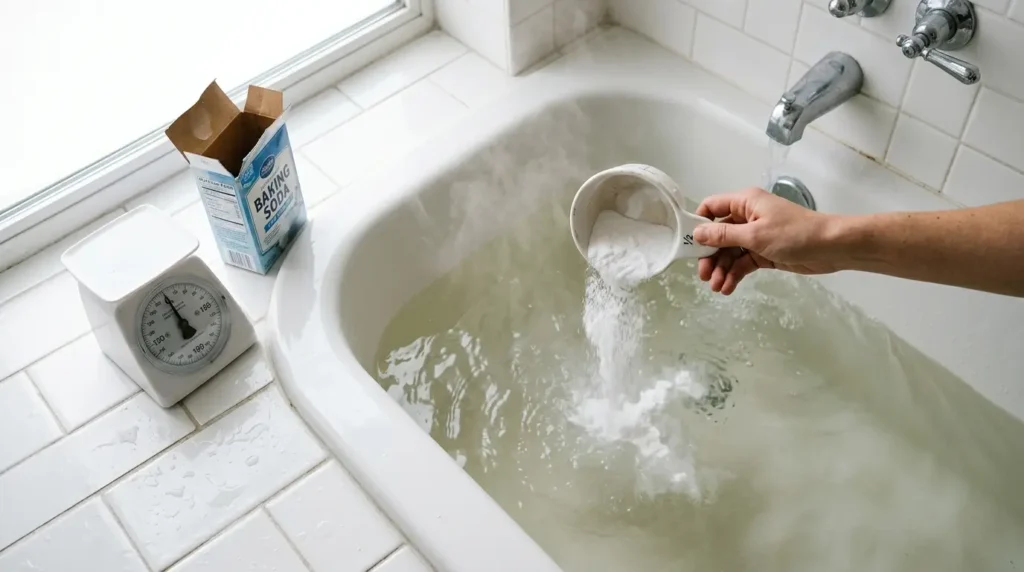
This is the standard full-body soak. Variations for sitz baths and foot soaks follow below.
What You Need
- Bathtub (clean)
- ¼ to ½ cup baking soda (standard adult dose; see dosage section below)
- Lukewarm water — not hot (target 92–100°F / 33–38°C)
- Gentle, fragrance-free moisturizer to apply immediately after
Steps
Step 1: Fill the tub Fill your bathtub with lukewarm water before adding baking soda. Hot water accelerates skin moisture loss and can worsen irritation; keep the temperature comfortable but not steaming.
Step 2: Add baking soda Add ¼ cup (about 65 g) for sensitive or dry skin, or ½ cup (about 130 g) for a standard soak. Stir or swirl until fully dissolved. Do not add baking soda to water that is already in motion from jets — the fizzing can be significant and the effective concentration becomes uneven.
Step 3: Soak for 15 to 40 minutes Fifteen minutes is sufficient for itching relief. Up to 40 minutes is reasonable for deeper relaxation. Do not exceed 40 minutes; extended soaking in any water will begin to strip the skin’s natural oils and disrupt the acid mantle.
Step 4: Rinse and moisturize immediately Rinse with clean lukewarm water, then pat (do not rub) dry with a soft towel. Within three minutes of exiting the bath, apply a generous layer of fragrance-free moisturizer or prescribed emollient. This “soak and seal” step is critical — it locks in the hydration the bath has provided and prevents the rebound dryness that occurs when wet skin is left to air-dry.
How Much Baking Soda to Use
| Situation | Amount | Water volume |
|---|---|---|
| Adult — general soothing soak | ¼ to ½ cup (65–130 g) | Standard bathtub (~100 L) |
| Adult — sensitive or dry skin | ¼ cup (65 g) | Standard bathtub |
| Child (under 12) | 2 tablespoons (30 g) | Shallow child’s bath |
| Sitz bath (pelvis/perineum only) | 4 tablespoons (60 g) | Sitz basin or shallow tub |
| Foot soak | 3 tablespoons (45 g) | Large basin |
Do not exceed ½ cup for a full-body adult bath. More baking soda does not produce proportionally better results; it increases the risk of skin irritation and electrolyte disruption if the alkaline water is absorbed in large amounts, particularly in people with compromised kidney function.
How Often Should You Take a Baking Soda Bath?
For acute flares (eczema, chickenpox, sunburn): Once daily for the duration of the flare, typically three to five days. The AAD’s soak-and-smear protocol calls for daily soaking while symptoms are active.
For general skin soothing or maintenance: Two to three times per week is a reasonable ceiling for most adults with healthy skin. Daily baking soda baths long-term are not recommended — repeated alkaline exposure can gradually raise skin-surface pH above its optimal range, weakening the barrier function and making skin more susceptible to irritation.
For yeast infection symptom relief: Once daily while symptomatic, alongside prescribed antifungal treatment, and only after confirming the diagnosis with your provider.
For foot soaks: Three to four times per week is safe and effective for odor and mild athlete’s foot symptoms.
Optional Add-Ins (and What to Skip)
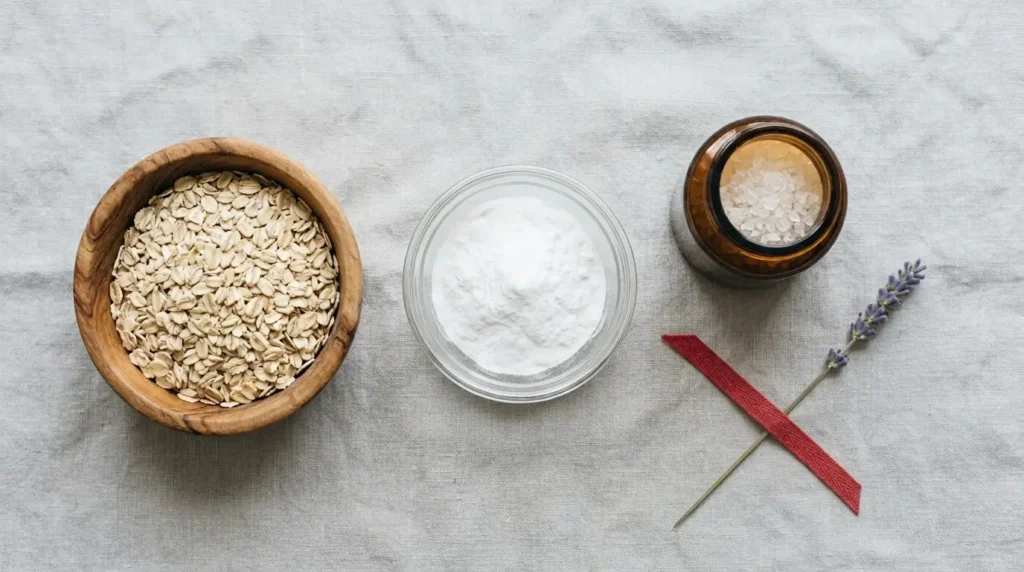
Some people enhance a baking soda bath with additional ingredients. A few are backed by evidence; most are not.
Colloidal oatmeal — strongly supported. The FDA has approved colloidal oatmeal as an over-the-counter skin protectant. Adding ½ cup to a baking soda bath provides both anti-itch (the baking soda) and barrier-repair (the oatmeal) effects in a single soak. Dissolve the oatmeal separately in a little warm water before adding it to the tub.
Epsom salt — commonly combined but works by a different mechanism (magnesium absorption and muscle relaxation). There is no evidence that combining Epsom salt with baking soda is superior to either alone, and together they can increase total mineral load in the water. If you use both, halve the dose of each.
Essential oils — generally not recommended for irritated or compromised skin. Lavender, tea tree, and eucalyptus oils are common sensitizers; they can trigger allergic contact dermatitis in people whose skin barrier is already compromised. If your skin is intact and healthy and you know you tolerate a particular oil, a drop or two is unlikely to cause harm, but there is no therapeutic reason to add them.
Vinegar — do not combine with baking soda in a bath. The acid-base reaction neutralizes both compounds, producing water and carbon dioxide. You get neither the anti-itch effect of alkaline water nor any benefit from the vinegar. (Dilute apple cider vinegar soaks are a separate remedy sometimes used to lower skin pH for certain eczema presentations — the opposite goal.) For more on what happens when these two ingredients meet, see our article on baking soda and vinegar.
Bleach — dilute sodium hypochlorite baths (“bleach baths”) are an entirely separate medical protocol prescribed for severe eczema and MRSA-associated skin infections. Do not confuse this with a baking soda bath. Bleach baths require precise dilution (typically ½ teaspoon per gallon of water) and are used under physician guidance.
Who Should Avoid Baking Soda Baths
Baking soda baths are not appropriate for everyone. Do not use them if you have:
Open wounds, sores, or broken skin. Sodium bicarbonate solutions can irritate exposed tissue and delay wound healing. This includes chickenpox lesions that have been scratched open.
Kidney disease. People with chronic kidney disease have reduced ability to excrete excess sodium. Even transcutaneous absorption during an extended soak can be a concern. Consult a nephrologist before using baking soda baths.
High blood pressure or heart failure. The sodium in sodium bicarbonate is not primarily absorbed through intact skin during a normal soak, but extended or frequent soaking adds a variable that patients managing sodium-restricted conditions should discuss with their cardiologist first.
Pregnancy (without medical clearance). Some sources suggest baking soda baths are safe in pregnancy for itching (pregnancy-related pruritus is common), but the hormonal and circulatory changes of pregnancy make it worth a quick conversation with your OB before adding any new soak routine.
Infants under 12 months. Infant skin has a markedly different pH profile and barrier function than adult skin. The AAD’s guidance for chickenpox soothing in young children uses colloidal oatmeal baths, not baking soda baths, for this age group.
Allergy or sensitivity to sodium bicarbonate. Rare, but possible. If you’ve noticed irritation from other baking soda topicals — such as a homemade baking soda toothpaste or a baking soda paste applied to skin — patch-test a small area of forearm before a full soak.
Baking Soda Bath vs. Other Baking Soda Wellness Uses
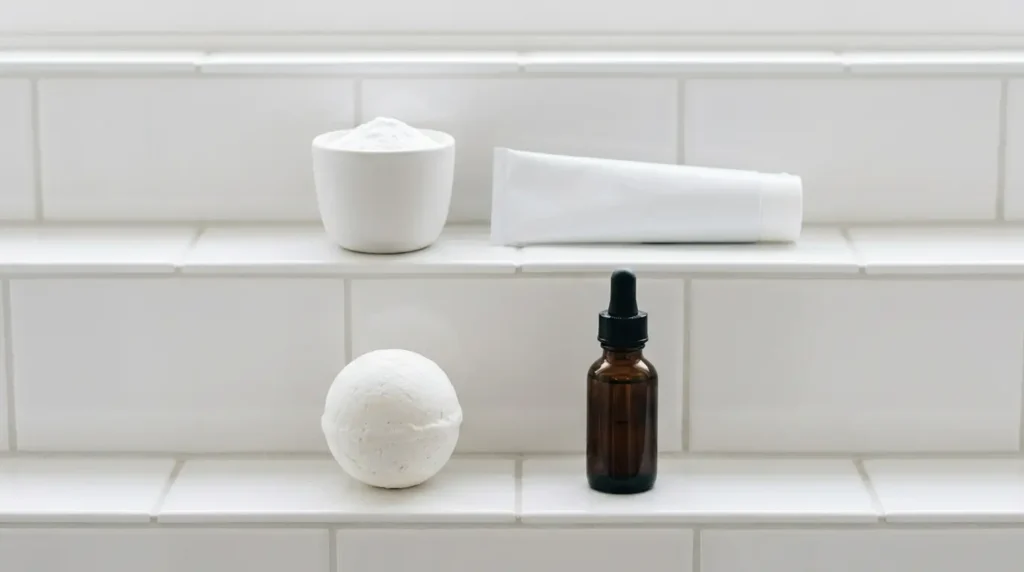
Baking soda’s wellness applications extend well beyond the bath. If you’re exploring what this ingredient can do across different categories:
- For oral care, our guide to baking soda teeth whitening covers the evidence on enamel safety and effective technique.
- For a fun, skin-softening alternative, the homemade bath bomb recipe uses baking soda as its core fizzing agent alongside citric acid and essential oils.
- For digestive discomfort, see our carefully sourced review of baking soda for acid reflux — which covers both the legitimate short-term use and the meaningful risks of regular ingestion.
Frequently Asked Questions
Does a baking soda bath change skin pH permanently?
No. The acid mantle typically rebounds to its normal pH within a few hours of bathing. The concern is with very frequent or very concentrated baking soda baths, which can chronically stress the barrier’s ability to recover, particularly in people with eczema whose skin pH is already disrupted.
Can I use baking soda bath for a UTI?
No. A urinary tract infection is an internal bacterial infection that requires antibiotic treatment. A baking soda bath may briefly soothe external irritation or burning during urination, but it has no effect on the bacteria inside the urinary tract. See a healthcare provider for diagnosis and treatment.
What if I don’t have a bathtub?
A foot soak basin works for foot-related issues. For eczema or full-body itch, a baking soda compress — dissolve 2 tablespoons in a bowl of lukewarm water, soak a soft cloth, and apply to affected areas for 10 to 15 minutes — provides a partial alternative.
Is a baking soda bath the same as a salt bath?
They work differently. Salt (sodium chloride) baths are isotonic or hypertonic soaks often used for wound care or psoriasis; the mechanism involves osmotic effects on inflamed tissue. Baking soda baths work primarily through pH alteration. Neither is a substitute for the other, and they serve different purposes.
Can I use the same baking soda I bake with?
Yes. Standard food-grade sodium bicarbonate — the kind in your pantry — is the correct product. You do not need a special “bath-grade” baking soda; that labeling is marketing. The only thing to verify is that the box hasn’t absorbed moisture and clumped, which can reduce its effectiveness. If you need a freshness check, our article on whether baking soda expires walks through a simple at-home test.
The Bottom Line
A baking soda bath is a well-supported, low-cost tool for temporary relief of itchy, irritated, or inflamed skin. The evidence is strongest for eczema flare management, chickenpox comfort, and mild yeast infection symptom relief. The recipe is simple: ¼ to ½ cup of baking soda in a lukewarm tub, soak for 15 to 40 minutes, moisturize immediately on exit.
The caveats matter: hot water, excessive frequency, too much baking soda, and skipping the moisturizer step can convert a soothing remedy into an irritant. And for anyone with kidney disease, open wounds, or a medical condition that affects sodium management, the conversation starts with a doctor, not a recipe.
Use it thoughtfully, and it earns its place in a practical home wellness routine.
All health content on bakingsodarecipe.com is reviewed for accuracy before publication. See our medical disclaimer for full disclosure.